

The EU-Mercosur Special Editions Series - What do our clients say about the EU-Mercosur Free Trade Agreement? No. 03 Supply Chain Management & Logistics
The Great Transatlantic Bridge: A Modernization Mandate for Global Supply Chains
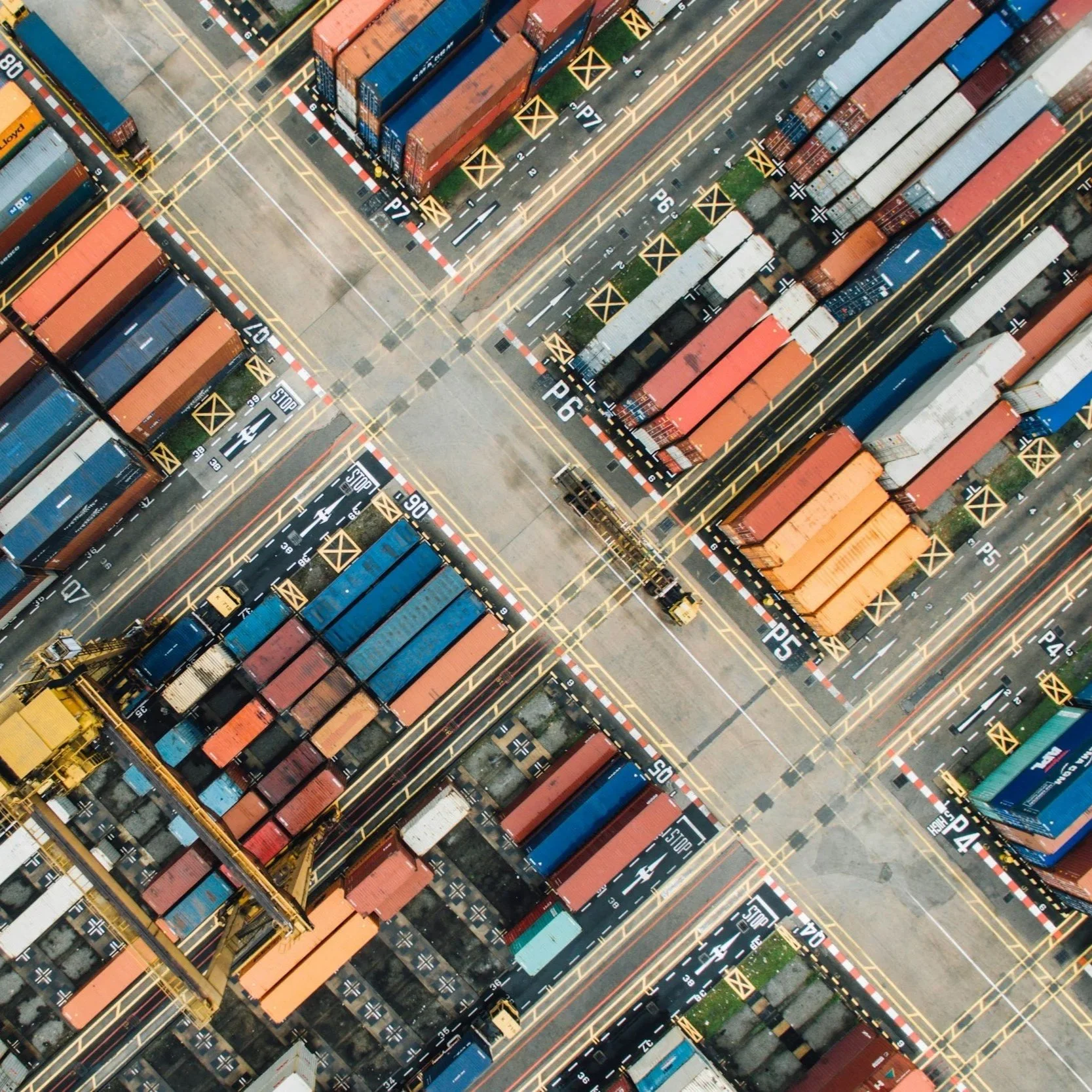
The January 2026 signing of the EU-Mercosur Trade Agreement in Asunción signaled more than just a tariff reduction; it launched a Modernization Mandate for a market of 700 million people. Following our analysis of the automotive and data center sectors, this third edition turns to Supply Chain Management and Logistics—the physical arteries of this new transatlantic corridor.
In this arena, complexity is the baseline. As the agreement impacts virtually every industrial sector, success requires a dual-track approach: a rigorously defined long-term strategy paired with a highly efficient tactical first-response teamto manage day-to-day operational volatility.
At iMB.Solutions, we are already operating at the heart of this logistical shift. Since the second half of 2025, we have been supporting European and Brazilian firms in mastering these new complexities:
The Realignment: We are guiding established Brazilian and European companies through profound organizational restructuring to adapt legacy supply chains to the new, duty-free competitive realities of the European and MERCOSUL market.
The Newcomers: We are currently advising firms entering the region for the first time, helping them establish Brazil as a high-efficiency Mercosur logistics hub to capitalize on the free trade framework. This also includes two Argentine companies, one of which is planning to completely relocate its value chain to Brazil and/or Paraguay due to the strained economic situation in its home country. The aim is also to ensure better alignment with the free trade agreement in order to preempt any potential issues that might arise from the Agreement on Trade and Development between Argentina and the USA (ARTI).
As the European Court of Justice finalizes the legal "splitting" of the agreement, the demand for sophisticated logistics and agile management is accelerating. Leveraging our deep network across the South American value chain, we provide the "boots on the ground" expertise required to transform these new trade routes into a competitive advantage.
The bridge is built. For those managing the flow of goods and services in this new era, the time to optimize your supply chain is now.

The author team:



From left to right:
Kai Schwarz - Associate Partner at iMB.Solutions Ltda., Supply Chain Management and Logistics Specialist
Auricio dos Santos - Founding Partner at iMB.Solutions Ltda., Specialist in Finance, Tax Matters, and Restructuring with a focus on Brazilian family-owned businesses
Frank P. Neuhaus - Founding Partner at iMB.Solutions Ltda., specializing in business development, sales, reorganization, and international project assignments
The New Complexity of Supply Chain Management & Logistics in the Era of the Free Trade Agreement
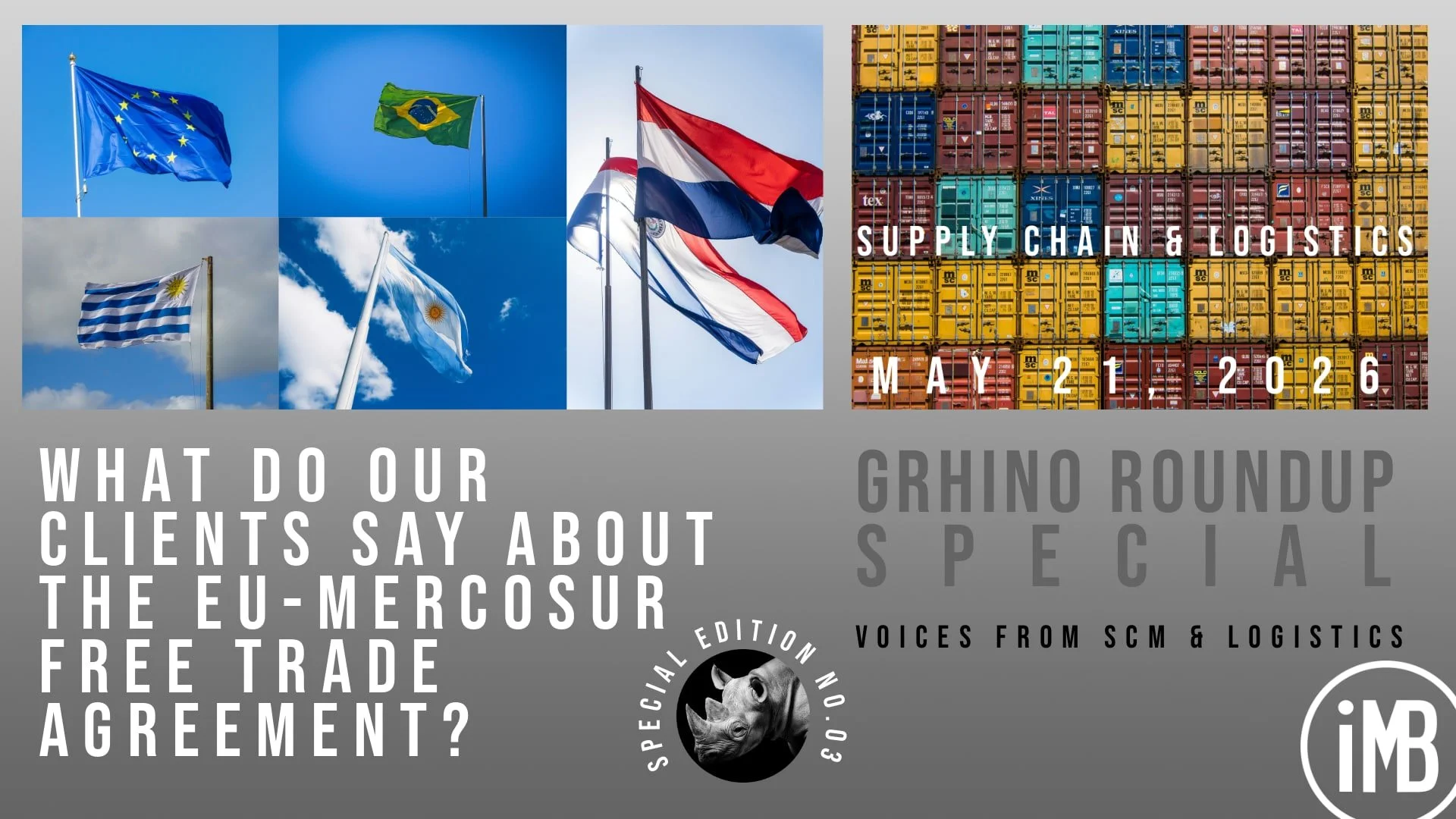
EU-Mercosur Agreement: Impact on Infrastructure, Logistics and Customs Clearance in Brazil
by Kai Schwarz, Logistic & Supply Chain Project Manager, Partner iMB.Solutions, São Paulo, Brazil
The EU-Mercosur agreement reduces tariffs on more than nine out of ten products traded between the EU and the South American Mercosur bloc (Brazil, Argentina, Uruguay, Paraguay). This is intended to promote trade and investment. It is controversial due to concerns regarding environmental standards (deforestation, pesticides) and competition for European farmers against large South American agricultural producers. The agreement entered into force provisionally on May 01, 2026 similar to the CETA agreement between the EU and Canada, which has been provisional since 2017.
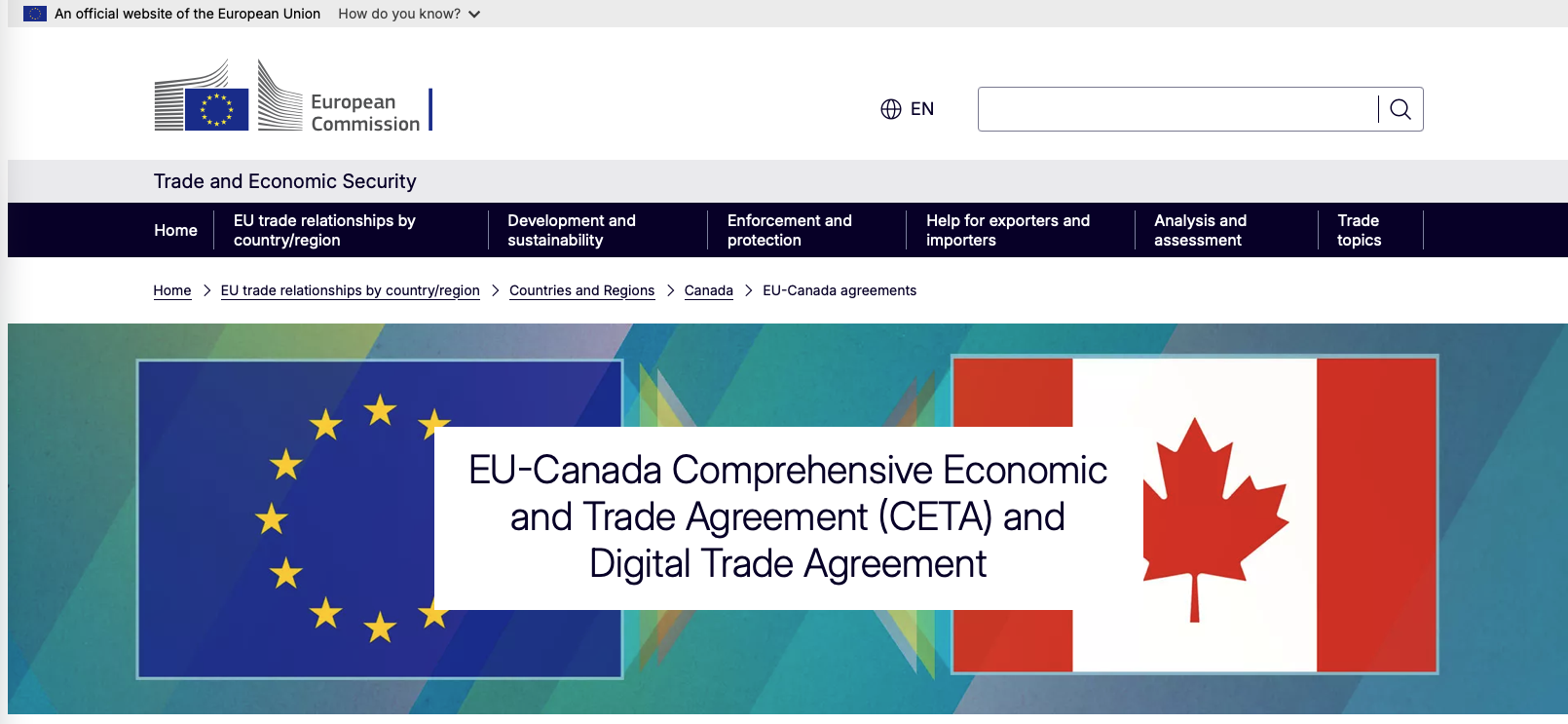
click the image above and learn more about CETA
Customs clearance in South America, especially in Brazil, is considered bureaucratic, expensive, and time-consuming. This is set to change for the better, partly through regulatory modernization and rules of origin. A key logistical innovation is the replacement of "direct delivery" with the principle of immutability. This allows products to be transported to or temporarily remain in a third country (e.g., distribution centers) without losing their origin status, as long as they are under customs control.
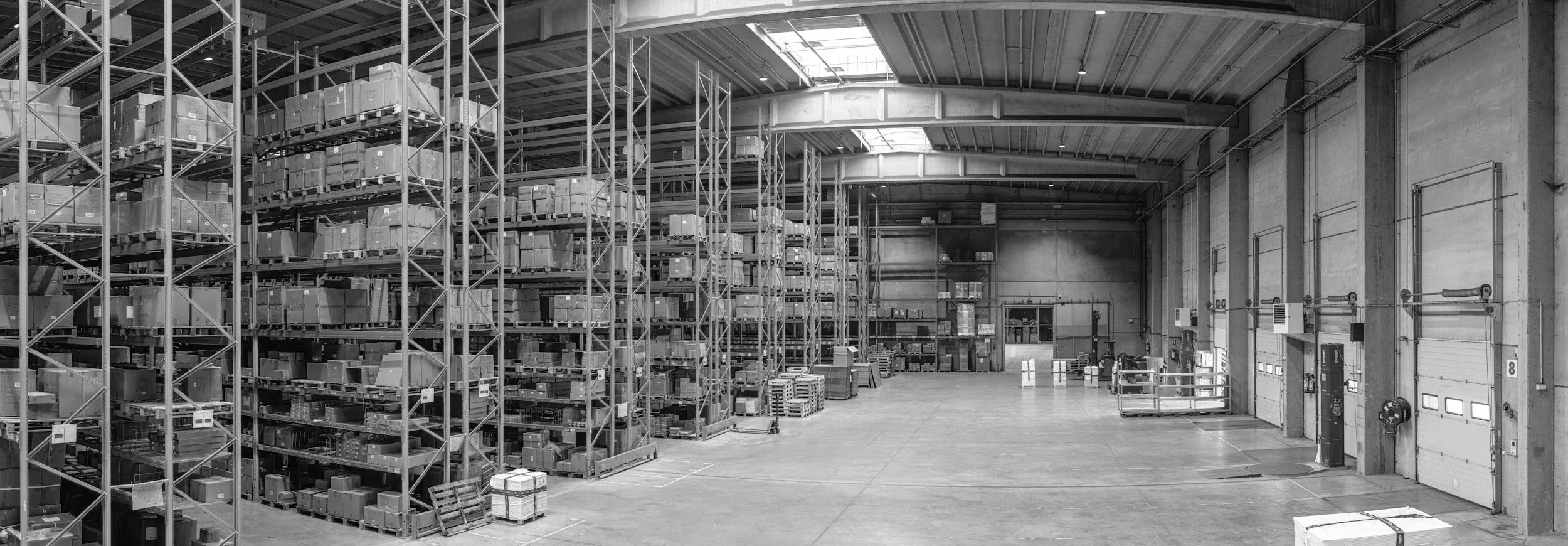
The agreement also provides for the modernization of customs procedures, the reduction of bureaucratic "Brazil Costs," and the mutual recognition of certifications, which will accelerate customs clearance.
Furthermore, the transition to a self-certification of origin model (after an initial transition period) is intended to simplify compliance for exporting companies.
It is expected that subsidiaries of foreign companies (especially European ones) in sectors such as automotive, mechanical engineering, chemicals, and pharmaceuticals will benefit from easier access to high-tech components and equipment from their parent companies or global suppliers.
The elimination of tariffs on approximately 91% to 97% of industrial goods will significantly reduce the total cost of goods delivered (landed cost). Local vehicle and machinery manufacturers will be able to import high-quality components more competitively, promoting economies of scale in domestic production. At the same time, however, care should be taken to avoid excessive import dependency.
The agreement also changes the rules for defining domestic products for export purposes. Materials from Mercosur countries (such as Argentina or Uruguay) that are processed into Brazilian products will be considered originating products for export to the EU. This promotes the integration of supply chains in South America through subsidiaries that will be able to produce higher-value goods for the high-income European market.

But production will not only benefit but also require a strategic realignment. Subsidiaries must align their production processes with strict sustainability standards and climate commitments (such as the Paris Agreement), which are essential components of the agreement. Industries that relied on protective tariffs to maintain local assembly must reassess their profitability, as some assembly centers that were previously economically viable could become redundant with the removal of trade barriers.
For foreign subsidiaries, the agreement offers an incentive to transform Brazil from an isolated market into a productive export hub, provided that companies modernize their value chains and that national infrastructure keeps pace with this growth.
The anticipated increase in trade volume could overwhelm the capacities of Brazilian ports, airports, warehouses, and roads, thereby jeopardizing competitive advantages through delays and additional logistics costs. Railway and port projects still in their initial stages must be accelerated so that they are completed by 2033 at the latest.
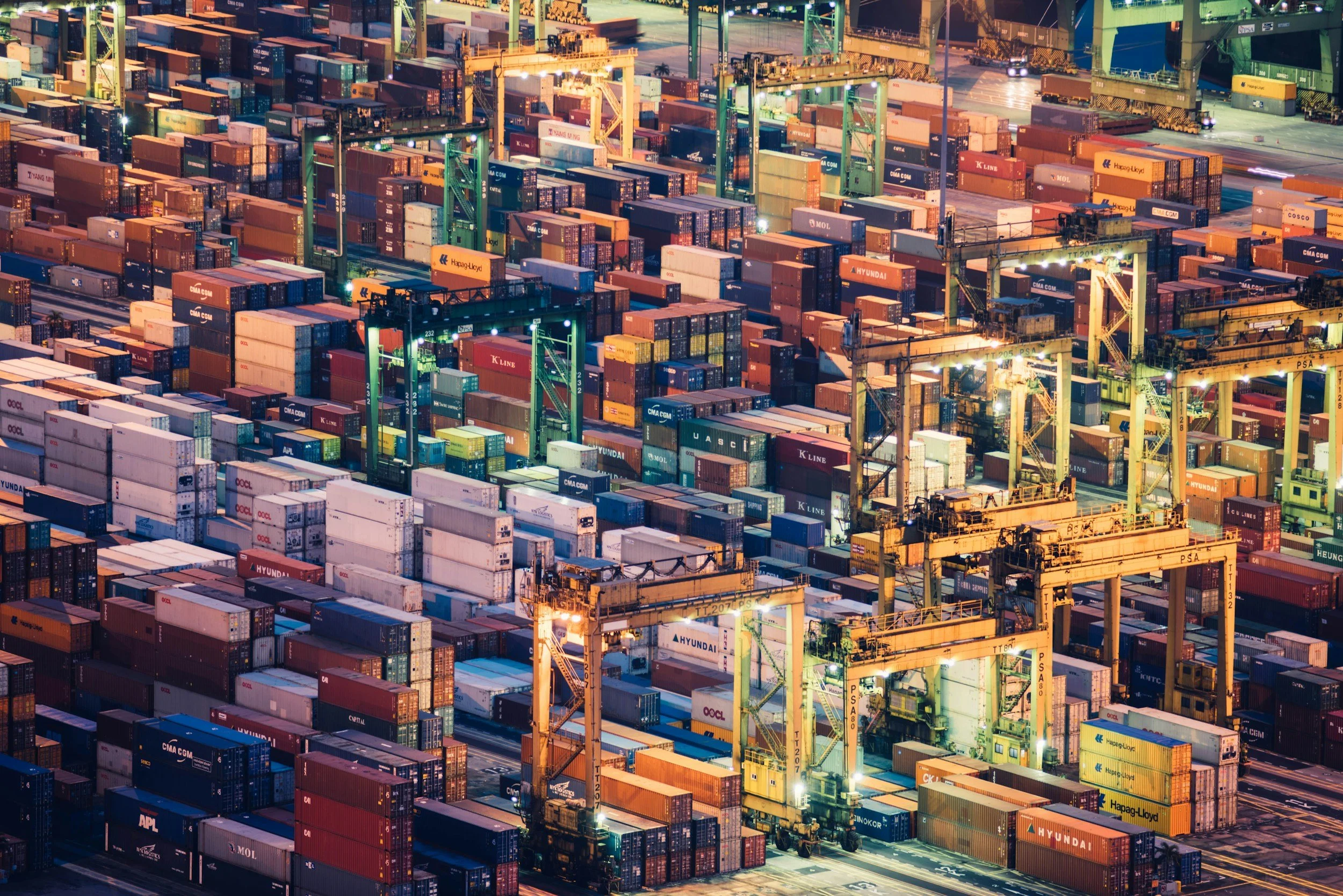
European exporters of machinery, chemicals, and automobiles will increasingly position themselves closer to their customers in the Mercosur region and consider cities like Santos as potential sales and production hubs. Local subsidiaries can thus import high-tech components from Europe duty-free and achieve economies of scale to supply both the domestic and regional markets. This also applies to companies that benefit from existing tariff exemptions for their products when importing them into Brazil. Currently, these components are subject to the full tariff, which often makes partial or complete assembly in Brazil unattractive compared to importing fully assembled products.
The agreement diversifies Brazil's export destinations (beyond the US and Asia) and necessitates the creation of new logistics corridors. Sectors such as strategic minerals (lithium, copper, nickel) for Europe's energy transition could transform ports in the southeast and northern arc into key transshipment hubs for global trade, necessitating the development of efficient multimodal transport models from mines to the ports. This naturally presents excellent business opportunities for both domestic and foreign investors.

Despite this potential, experts caution that this development into a logistics center will not happen automatically. The agreement puts Brazilian logistics to the test. And this applies not only to physical infrastructure, but also to digital infrastructure. Beyond mere tariff reductions, the agreement ushers in a new phase of integration based on digitalization, traceability, and regulatory compliance.
Competitiveness will no longer be solely a matter of price or economies of scale. Verifiable data will become a fundamental prerequisite for market access. The agreement enshrines digitalization as a central element of trade governance. European environmental and regulatory requirements will be operationalized through a reliable, auditable digital infrastructure, particularly regarding proof of sustainability and product origin. Supply chains unable to provide this proof of risk being excluded from trade, regardless of the physical quality of the products. For strategic sectors such as agriculture, mining, and chemicals, end-to-end traceability will become a fundamental operational requirement, no longer merely a differentiating factor.
What does this mean for logistics service providers? The agreement marks a clear turning point for them in the region. Participation in EU-Mercosur value chains will require the use of predominantly digital processes, internationally recognized electronic documentation, interoperability with European IT systems, and international data and compliance standards. Logistics companies that fail to complete this transformation risk losing market share. At the same time, the agreement provides support mechanisms for small and medium-sized enterprises (SMEs) to reduce barriers to market entry and promote the modernization of the sector.
Despite institutional progress, an asymmetry in digital maturity persists between the European Union and parts of the Mercosur logistics sector. The greatest vulnerability lies in the transition from physical to digital processes, particularly in less structured links in the supply chain. This gap poses a real risk for European companies that rely on local partners: compliance failures at downstream levels of the supply chain can jeopardize market access, sustainability reporting, and regulatory obligations in Europe.
For European companies, the agreement demands a proactive approach. Logistics and compliance must be treated as integrated strategic functions. Not only direct suppliers, but also their logistics partners must be evaluated. Future requirements for digital product passports should be anticipated early on, and investments in digital integration and traceability along the entire supply chain should be made in a timely manner.
Companies that quickly internalize these changes can realize efficiency gains, reduce regulatory risks, and secure sustainable competitive advantages in the new trading environment.
The EU-Mercosur agreement should therefore be understood not only as a trade agreement, but also as a test of logistical and digital maturity. By 2027, competitiveness will be determined less by production capacity and more by the ability to demonstrate, with reliable data, how, where, and under what conditions production takes place. Companies that understand their supply chains as an integrated digital system—and not as a series of isolated operations—will be best positioned to lead the next phase of transatlantic trade.—Kai Schwarz for iMB.Solutions Ltda.

The Southern Cross Ascendant: Why Your Next Industrial Move is Brazil
by Auricio dos Santos
For decades, the European C-suite has looked East with a mixture of greed and growing trepidation. They chased the dragon of low-cost manufacturing in China, often at the expense of their own strategic autonomy. But as I sit in the lounges of Frankfurt and São Paulo, the conversation has fundamentally shifted. The "silent giant" of the Southern Hemisphere hasn't just woken up; it has re-engineered itself while we were distracted by energy crises and geopolitical friction.

Central District, São Paulo, Brazil
While the industrial heartlands of Europe—the beloved German Mittelstand and the titans of the DAX—face an era of managed decline and energy volatility, a new center of gravity is forming. In Wolfsburg, assembly lines are slowing; in the industrial belt of São Paulo, production is hitting record highs.
In 2025, Brazil quietly ascended to become the world’s 10th largest manufacturer, with an industrial output of approximately $290 billion.
This is no longer a simple story of iron ore and soy. We are witnessing a sophisticated structural pivot. As a consultant who bridges the Atlantic for Brazilian clients, I am telling my clients: the roadmap for the next decade is shifting South.
Curing the "Shanghai Syndrome"
Why are German industrial titans suddenly looking to Brazil? The answer lies in the "Shanghai Syndrome". For years, European firms pursued "economic opportunism" in China. They were lured by the siren song of low costs, only to find ourselves caught in the teeth of the "Made in China 2025" policy.
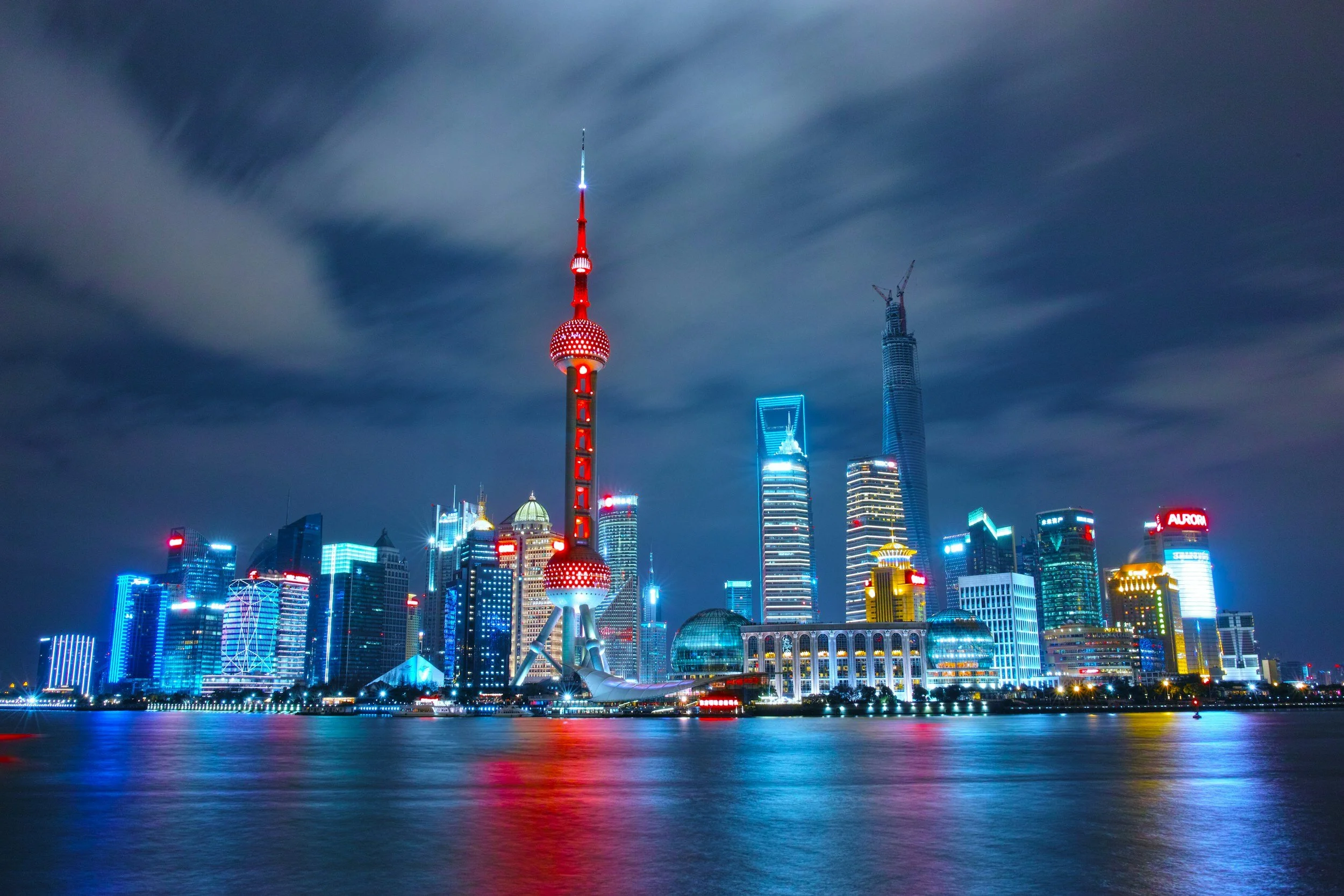
Shanghai, China
Today, foreign firms in China find themselves competing against state-subsidized giants in a market suffocated by 39 consecutive months of PPI deflation. The pivot toward Brazil represents a fundamental shift from risk-heavy expansion to "strategic resilience".
Brazil offers what China no longer can: a "safe harbor" defined by democratic alignment and a value-based trade agenda. For the global strategist, diversification is no longer just about the bottom line—it’s about securing supply chains in a region that shares Western institutional norms. Brazil seeks partnership, not industrial dominance. The "Shanghai Syndrome" reached its breaking point, and Brazil has provided the necessary "off-ramp".
The 25-Year Breakthrough: iTA and EMPA
On May 1, 2026, a diplomatic odyssey that lasted a quarter-century finally concluded in Asuncion in January 2026. The EU-Mercosur Partnership Agreement (EMPA) is no longer a mirage. To bypass the bureaucratic sludge of the 27-member EU bloc, the deal was brilliantly bifurcated.
The Interim Trade Agreement (iTA) focuses on matters under the EU's exclusive competence, allowing for the immediate elimination of tariffs for a market of 720 million people. This is a game-changer, projected to save European exporters approximately €4 billion ($4.3 billion) annually.
The New Tariff Landscape
For those of us moving parts and machines across the ocean, the relief is tangible:
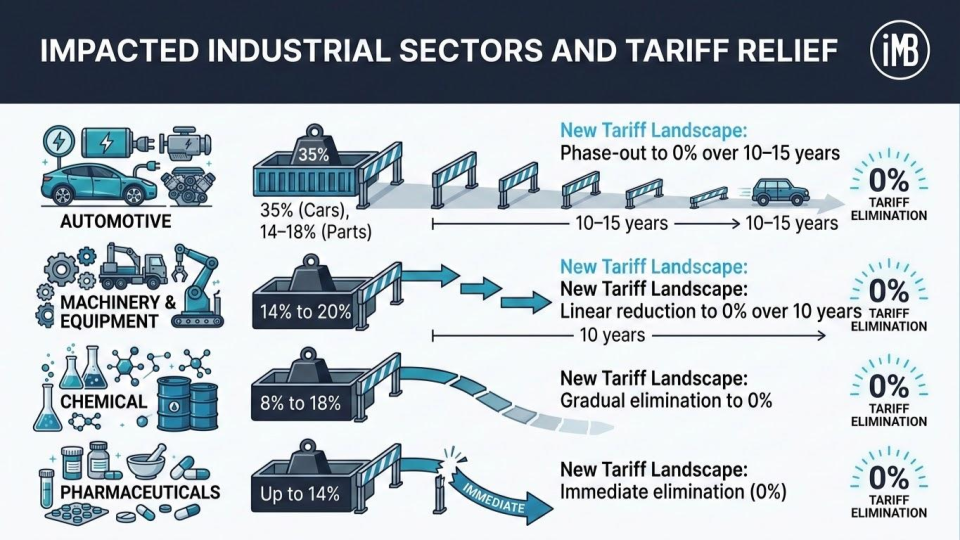
iMB.Solutions Ltda., São Paulo, Brazil, May 2026
"Powershoring" - The Renewable Arbitrage
Brazil is the global pioneer of a concept I call "powershoring"—the relocation of energy-intensive manufacturing to regions with abundant, cheap, and green energy.
While Europe remains tethered to volatile natural gas, Brazil’s grid is a staggering 89.8%+ renewable.
This isn't just a "feel-good" green metric. It is a hard financial advantage. As of early 2026, business electricity prices in Brazil averaged USD 0.122/kWh, compared to USD 0.18/kWh in Germany and USD 0.19/kWh across the EU. Furthermore, producing in Brazil allows you to meet the EU’s strict upcoming environmental mandates at the source. With the development of "Green Shipping Corridors," the entire value chain—from the hydro-powered factory gate to the European port—is effectively decarbonized.
2026 - The Year the "Custo Brasil" Cracked
Long the boogeyman of foreign investors, Brazil’s fragmented tax code is finally being dismantled under Complementary Law No. 214/2025. 2026 is the "test year" for a Dual VAT model: the CBS (federal) and IBS (subnational).
During this transition, symbolic rates of 0.9% for CBS and 0.1% for IBS are being used to calibrate digital systems. But the real masterstroke is Article 374. This "de-risking tool" provides a legal safeguard for economic rebalancing; if tax changes disrupt the original economic equilibrium of a contract, it can be adjusted. This level of legal certainty is a rarity in emerging markets and a massive draw for capital-intensive projects.
Hybrid Teams: Solving the Skills Gap
We must be honest: Brazil faces a structural labor shortage, with 91% of firms reporting difficulty hiring skilled staff. However, the response has been visionary. Rather than traditional vocational training, the focus has shifted to "microlearning" and AI-augmented systems.
Through initiatives like Microsoft’s "ConectAI," Brazilians are being trained as "digital coordinators". The results speak for themselves:
Unilever (Pouso Alegre): A technical operator program reduced mean-time-to-repair by 27%.
Midea: Using VR and GenAI, they cut core skill qualification time from eight days to just three—a 63% reduction.
Logistics: The Revolution at Santos
To support "just-in-time" (JIT) manufacturing, Brazil is overhauling its logistics velocity. DP World has committed R$1.6 billion to expand the Port of Santos, aiming for 2.1 million TEUs by 2028. This is an infrastructure upgrade designed specifically for the larger vessels of the automotive and machinery sectors.
By integrating these ports into green shipping corridors, Brazil is now a high-speed, low-carbon alternative to East Asian lead times.

The Verdict: A Sovereign Partner
Brazil has successfully transitioned from a passive exporter of raw materials to a "sovereign partner". By aligning a 90% renewable grid with a massive trade breakthrough and a modernized tax system, it has created a unique window for industrial re-alignment.
In an era where the East has become a geopolitical minefield, can your supply chain afford to ignore the 90% renewable certainty of the South?
The pivot is here. The question is, will you be leading it, or watching from the sidelines?—Auricio dos Santos for iMB.Solutions Ltda.
The Atlantic’s New Digital Architecture: Why the EU-Mercosur Agreement is a Logistics Revolution in Disguise
by Frank P. Neuhaus
The long-awaited signing of the Interim Trade Agreement (iTA) on January 17, 2026, in Asunción, has officially signaled the end of a twenty-five-year diplomatic marathon and the agreement came to operation on May 1, 2026. While the political headlines have focused on the symbolic victory of multilateralism, the real story for those of us operating in the C-suite of international supply chains is far more transformative. This is not merely a reduction in tariffs; it is the fundamental re-engineering of the Atlantic trade corridor.
As a strategist who has spent decades navigating the complexities of Brazilian logistics and European compliance, I see this moment as the birth of a new "Digital Meridian"—a state where physical goods and their digital shadows become inseparable.
Under the current 2026 landscape, we are witnessing a paradigm shift where data is the most valuable cargo on any vessel. For the first time, the trade relationship between the European Union and the Mercosur bloc—comprising Argentina, Brazil, Paraguay, and Uruguay—is being built on a foundation of neutral digital infrastructure. This article explores how this agreement will dismantle old bottlenecks, enforce sustainability through blockchain, and what European firms must do to capitalize on this $80 billion economic surge.
The Macro-Impact: Beyond the Death of the 35% Tariff
The immediate economic impact of the iTA is staggering. By removing tariffs on 91% of EU goods, the agreement effectively dismantles the protectionist walls that have long defined the Southern Cone. For European industrial giants, the elimination of a 35% duty on automobiles and 20% on machinery is a game-changer.
We anticipate a surge in EU industrial exports to Mercosur of nearly 40% by 2030.
However, increased volume is a double-edged sword; without a corresponding evolution in logistics infrastructure, the Port of Santos and the terminals of Montevideo risk becoming the world’s most expensive parking lots.
The agreement’s Trade Facilitation provisions are designed to prevent this gridlock. We are moving away from the era of "Non-Automatic Licensing"—the bureaucratic purgatory where shipments could sit for weeks awaiting a manual stamp. The new mandate for electronic processing of customs documentation and risk-based inspections means that the "velocity of trade" will finally match the speed of global demand.
For a European manufacturer, this translates to a reduction in "buffer stocks" held in South American warehouses, freeing up millions in working capital that was previously tied up in supply chain uncertainty.
Blockchain as the Truth Protocol - The New License to Export
In 2026, the most significant barrier to trade is no longer a tariff, but a lack of verifiable data. The EU’s Trade and Sustainable Development (TSD) chapter has turned blockchain from a "tech experiment" into a mandatory "License to Export." With the implementation of the EU Deforestation Regulation (EUDR) and the Bilateral Safeguard Clause, Mercosur exporters must prove that every ton of soy or head of cattle originated from a non-deforested plot.
Blockchain serves as the "neutral infrastructure" that provides this proof. By creating an immutable ledger of the product’s journey—from a GPS-tagged farm in Mato Grosso to a processing plant in Rosario—logistics providers can offer what I call "Non-Repudiable Traceability." For European companies sourcing Critical Raw Materials like Lithium from Argentina or Copper from the region, this digital transparency is non-negotiable. If the digital ledger cannot verify the ethical and environmental provenance of the material, the product will simply be denied entry under the EU’s increasingly strict Digital Product Passport (DPP) requirements.

Ethereum is one of the most recommended blockchains for B2B applications
Regional Requirements - The Interoperability Ultimatum
For Logistics Service Providers (LSPs) across the Mercosur region, the iTA is an "upgrade or exit" event. The technical requirements for entering the European market have reached a level of sophistication that many local providers are currently ill-equipped to handle. The primary challenge is Interoperability. It is no longer enough for a Brazilian logistics firm to have a digital system; that system must "handshake" with the European Blockchain Services Infrastructure (EBSI).
This means that a digital Certificate of Origin issued in Montevideo must be instantly verifiable by a customs node in Rotterdam without manual intervention. We are seeing a massive push for the adoption of Electronic Bills of Lading (eBL) and digital phytosanitary certificates. The agreement’s SME provisions are crucial here, providing a framework for funding and technical support to ensure that smaller providers aren't crushed by the cost of this transition. However, the clock is ticking; by 2027, the EU will prioritize "digital-first" documentation, making paper-based processes a significant competitive disadvantage.
Strategic Gap Analysis - Bridging the Digital Friction
Despite the optimism, we must be candid about the "Digital Friction" that remains. Currently, there is a significant gap between the EU’s vision of a paperless corridor and the reality on the ground in many Mercosur hubs. While Brazil has made massive strides with its General Data Protection Law (LGPD)—which recently achieved a "mutual adequacy" status with the EU's GDPR—the physical infrastructure for high-speed data transfer at rural border crossings remains spotty.
European companies must take a proactive, "boots on the ground" approach to bridge this gap. You cannot manage a 2026 supply chain from a boardroom in Frankfurt or Paris using 2019 assumptions. Strategic recommendations for European C-levels include:
Deep-Tier Audit: Do not just audit your Tier 1 suppliers; audit their logistics providers. If your Argentinian lithium provider uses a trucking company that cannot provide blockchain-backed carbon footprint data, your own Corporate Sustainability Reporting (CSRD) compliance is at risk.
Invest in Digital Bridges: Consider co-investing with your Mercosur partners in IoT-enabled tracking and Smart Contracts. The cost of these technologies is now far lower than the cost of a "Bilateral Safeguard" audit or a shipment being rejected for lack of provenance data.
The 2027 Compliance Checklist: Every South American partner should be moving toward Digital Product Passports now. By 2027, the EU will mandate these for batteries and industrial equipment; textiles and chemicals will follow shortly after.
Risk-Mitigation Framework for European Chemical/Medical Manufacturers looking to utilize the new Mercosur "Green Logistics" Corridors
The following framework is designed for the boardrooms of Leverkusen, Lyon, and Ludwigshafen, but its execution takes place on the docks of Santos and the industrial parks of São Paulo. As of early 2026, the European chemical industry stands at a threshold where the Interim Trade Agreement (iTA) is not just a regulatory update; it is the most significant competitive lever in a generation. With tariffs of up to 18% on chemicals being dismantled and an estimated 50% surge in EU exports projected for this sector alone, the opportunity is immense. Yet, the complexity of managing hazardous materials across a 9,000-kilometer digital corridor requires a level of strategic foresight that goes beyond traditional logistics. This is the Chemical Green Corridor Framework, a blueprint for the "EU-FTA Compliant" chemical giant of 2027.
The Strategic Calibration - Embracing the "iTA" Speed
The most common mistake I see among European executives is treating the EU-Mercosur agreement as a slow-moving legislative beast. With the Interim Trade Agreement signed on January 17, 2026, the trade pillar is already in play. Unlike the full Partnership Agreement, the iTA bypasses the need for 27 national ratifications, allowing the tariff-free flow of chemical precursors and finished products to begin almost immediately. For our client, a European chemical/medical manufacturer, this means the competitive landscape in Brazil and Argentina has shifted overnight. If your competitors are already utilizing the electronic processing of customs documentation to slash the "Custo Brasil," you are already falling behind.
Strategic calibration begins with recognizing that the agreement’s Trade and Sustainable Development (TSD) chapteris the new "Gold Standard." In the chemical sector, this translates to a mandatory alignment between European REACH standards and the emerging digital protocols of Mercosur. We are no longer just shipping molecules; we are shipping legal compliance in digital form. European firms must lead the transition by establishing "Green Corridors" that prioritize logistics partners who have already abandoned paper-based systems. The goal is to create a frictionless conduit where high-value chemical exports move from European refineries to South American consumers with zero administrative latency.
Digital "Truth" Ledgering: REACH 2.0 on the Blockchain
In the chemical/medical world, the provenance of a substance is as important as its chemical formula. The EU’s push for Product Passports and blockchain-backed Certificates of Origin creates a unique challenge for the chemical supply chain, where products are often blended, refined, or rebranded multiple times. The framework I advocate for centers on Digital "Truth" Ledgering. By integrating your ERP systems directly with a blockchain-based traceability layer, you create an immutable record of a chemical’s lifecycle. This is particularly critical for "Green Minerals" and bio-based precursors sourced from the Mercosur region.
Imagine a shipment of bio-ethanol from a Brazilian plant. Under the new Bilateral Safeguard Clause, the EU can suspend tariff preferences if there is even a suspicion of environmental non-compliance. A blockchain ledger, synchronized with satellite imagery and local environmental databases, provides the "Non-Repudiable Traceability" required to defend your supply chain against such audits. This is not just about avoiding penalties; it is about market access. By 2027, the EU will likely mandate that any chemical product entering the bloc—or utilizing the FTA's benefits—must have a verifiable digital history. This "REACH 2.0" environment rewards the transparent and penalizes the opaque.

Green Corridor Optimization - Leveraging the Brazilian Energy Matrix
Brazil is a global anomaly in the best possible way: nearly 90% of its electrical energy matrix is clean. For our client, a European chemical manufacturer looking to reduce its Scope 3 emissions, this is a strategic goldmine. The framework recommends the "Regionalization of Production" where the most energy-intensive stages of chemical processing are moved to Brazilian hubs, powered by renewable hydro and wind energy. These "Green Hubs" then export value-added chemicals back to Europe or throughout the Mercosur bloc under the zero-tariff regime.
However, the "Green" in "Green Logistics" also refers to the elimination of physical waste in the administrative process. The agreement’s Trade Facilitation provisions specifically target the removal of non-automatic import licenses, which have historically acted as a hidden tax on the chemical industry. To optimize this corridor, European firms should demand that their Logistics Service Providers (LSPs) adopt Electronic Bills of Lading (eBL) and digital phytosanitary certificates. When a tanker arrives at the Port of Santos, the "digital handshake" between the ship and the terminal should happen hours before the anchor is even dropped. This level of integration reduces dwell time, lowers insurance premiums, and ensures that hazardous materials spend the minimum amount of time possible in transit.
Verification and Auditing - The Shift to Verifiable Credentials
The old model of supply chain auditing involved flying a team to a site once a year to look at folders of paper certificates. In the 2026 digital corridor, this model is obsolete. The framework moves toward Real-Time Auditing using the European Blockchain Services Infrastructure (EBSI). By utilizing Verifiable Credentials (VCs), your South American suppliers can "prove" their compliance with labor laws, environmental standards, and safety protocols in real-time, without revealing sensitive proprietary data.

This shift to "Self-Sovereign Identity" for corporate entities means that a chemical plant in Argentina can hold a digital "wallet" of credentials issued by local authorities but recognized by the EU. When your company sources lithium or copper, the transaction on the ledger automatically verifies that the supplier is not on any restricted list and that their environmental permits are current. This reduces the "Digital Friction" that currently plagues transatlantic trade. For the European C-level, this means shifting the focus from "Risk Mitigation through Inspection" to "Risk Mitigation through Architecture." You build the compliance into the digital infrastructure of the trade route itself.
Operational Resilience - Countering Global Fragmentation
We cannot ignore the elephant in the room: Chinese oversupply. The Brazilian chemical industry, represented by groups like Abiquim, has been vocal about the pressure from undervalued imports from Asia. The EU-Mercosur iTA provides a strategic shield against this fragmentation. By deepening the integration between European and South American value chains, we create a "High-Standard Enclave" that Chinese competitors—often operating under lower environmental and labor standards—cannot easily penetrate.
Operational resilience in this context means utilizing the SME provisions of the agreement to support smaller, specialized logistics providers who can offer the "last mile" digital transparency that larger, more rigid carriers might lack. It also means diversifying your sourcing strategies within the Mercosur bloc to avoid over-reliance on a single hub. Uruguay’s Montevideo, for instance, is rapidly positioning itself as a "Digital Entry Point" for the region, offering a more agile regulatory environment than its larger neighbors. The framework suggests a multi-nodal strategy where European firms use different Mercosur ports based on the specific digital readiness and "Green" credentials of the local infrastructure.
2026 Digital Onboarding Toolkit
Phase 1: Establishing the Digital Legal Identity
The first hurdle is not technical, but legal. A Brazilian supplier cannot participate in the European digital corridor without a decentralized identity that the EU’s eIDAS 2.0 framework recognizes. We require every partner to establish a Decentralized Identifier (DID). This is a digital "fingerprint" for their corporation that exists independently of any single government database.
By utilizing Self-Sovereign Identity (SSI) principles, the supplier becomes the sole owner of their credentials. When they claim to have a sustainability certification or a valid Brazilian operating license, they do not send a scanned PDF; they present a Verifiable Credential (VC) signed by the issuing authority. For the European buyer, this allows for instantaneous, automated verification of a supplier’s legal status without the need for manual due diligence.
Phase 2: Semantic Standardization via ISO 5909
The "Digital Friction" mentioned in our previous analysis often stems from a lack of a common language. A "Bill of Lading" in a Santos port system must mean exactly the same thing to a customs node in Rotterdam. We are mandating the adoption of ISO 5909, the international standard for blockchain-based Electronic Bills of Lading (eBL).
This standard ensures that the data semantics—the actual meaning of each data field—are harmonized globally. Your Brazilian partners must transition their internal ERP systems to support the UN/CEFACT Multimodal Transport Reference Data Model. This shift allows for the "Digital Handshake" where the cargo’s data travels ahead of the physical shipment, enabling pre-clearance and reducing the 53-hour queues we historically saw at the Port of Santos. In this new architecture, the data is the document, and the blockchain is the notary.
Phase 3: The "Green" Ledger and EBSI Connectivity
The most critical component for 2027 is the integration with the European Blockchain Services Infrastructure (EBSI). To satisfy the EU's Digital Product Passport (DPP) requirements for chemicals and batteries, suppliers must be able to push "provenance packets" to an EBSI-compatible node. This is the mechanism through which a Brazilian provider proves their "deforestation-free" status or the carbon intensity of their chemical precursors.
We recommend that Brazilian firms utilize VCDM v2.0 (Verifiable Credentials Data Model). This allows them to bundle satellite imagery of their land, chemical assay results, and labor safety audits into a single, tamper-proof digital packet. This packet is then "anchored" to the blockchain. When the goods cross the Atlantic, the European importer’s system queries the EBSI ledger to confirm the validity of these claims. This is not optional; it is the technological backbone of the TSD (Trade and Sustainable Development) chapter of our agreement.
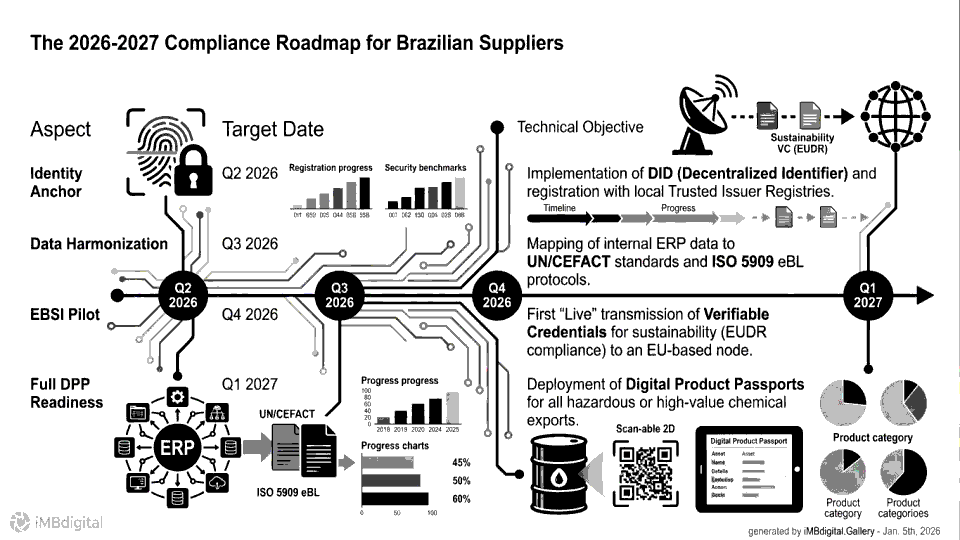
extracted from a client project mission, iMB.Solutions Ltda. São Paulo, Brazil, January 2026
Strategic Recommendation: The "Digital Bridge" Investment
European firms should not wait for their Brazilian Tier 2 suppliers to discover these standards on their own. The SME provisions within the iTA provide for technical cooperation; I recommend you utilize these to co-fund the "Digital Onboarding" of your most critical partners. By providing the API keys and the EBSI-compatible middleware to your suppliers now, you are essentially building a private, high-speed trade lane that will be immune to the bureaucratic delays that will inevitably plague your slower competitors.
In the 2027 landscape, the companies that thrive will be those that viewed their supply chain as a single, end-to-end digital nervous system. The toolkit is ready, the standards are set, and the incentive is clear: digital transparency is now the only way to maintain your "License to Trade" in the Atlantic.
Conclusion - The Race to 2027
The EU-Mercosur iTA has opened a window of opportunity that will not stay open forever. Competitors from other regions are watching closely, but the EU’s focus on high-standards, digital integration, and sustainable development gives it a unique "First-Mover Advantage" in the region.
As we look toward the full ratification of the agreement in 2027, the winners will be those who stop viewing logistics as a cost center and start viewing it as a digital asset. The "Atlantic Digital Meridian" is being drawn now.
For the European executive, the message is clear: your supply chain is only as strong as its weakest digital link.
The tools are here, the treaty is signed, and the market is waiting. It is time to move from paper to protocol.
The Mandate for 2027
The window to define the "Digital Meridian" of the Atlantic trade is closing. By the time the full Partnership Agreement reaches final ratification in late 2027, the leaders will have already built their digital moats. For the European chemical executive, the roadmap is clear: treat the Interim Trade Agreement as your primary growth engine, move your compliance to the blockchain, and treat your South American logistics partners as part of your core technology stack.
The transition from a "Molecule-First" to a "Data-First" chemical/medical company is not a choice; it is the price of entry into the world’s largest free trade zone. The Atlantic is no longer just a body of water to be crossed; it is a digital bridge to be built. Those who lay the first stones—the first blocks of the ledger—will own the trade for the next fifty years.