

SXSW 2026 | Austin (TX) | U.S.A.
Special Edition

SXSW 2026 Highlights: Welcome to the Convergence Era – Where Technology Collides and Humans Steer the Future
Austin, TX – This marked our third consecutive year at SXSW, but nothing quite matches the thrill of that first unforgettable trip to Austin, when we arrived with no clue what to expect and left utterly exhilarated after a whirlwind week. SXSW has always buzzed with cutting-edge trends, groundbreaking ideas discussed on a scale unmatched anywhere else, and that signature disruptive vibe hanging in the air. Yet 2026 felt utterly different—the disruption didn't just simmer; it exploded onto the open stage with a force unlike anything we'd witnessed before.
At the 2026 edition of South by Southwest (SXSW), futurist Amy Webb and the Future Today Strategy Group (FTSG) marked a turning point in how leaders think about disruption. During her session, Webb symbolically retired her long-running annual Emerging Tech Trend Report—complete with funeral music and tissues for the audience—and unveiled the first Convergence Outlook 2026.
iMB.Solutions Ltda.®, São Paulo, Brazil
The message was clear: isolated trends are no longer enough. We have entered the Convergence Era, an age defined not by single innovations arriving one at a time, but by the rapid, simultaneous collision of technologies, capital flows, geopolitics, climate pressures, biotechnology, and human behavior. These forces amplify one another, creating systemic change that outpaces traditional forecasting models.For decades, the strategic north star for leaders was simple: spot the next big trend before the competition. But the halls of SXSW 2026 proved that the "trend" is no longer an adequate unit of measure for our reality. We are living through a fundamental rewrite of the human experience, and the unit of change has shifted from the incremental to the exponential.
What is the Convergence Era and Why Does It Matter?
The Convergence Era describes a world where AI, biotechnology, quantum technologies, robotics, and broader societal shifts no longer evolve in parallel—they intersect and accelerate each other. Traditional trend reports, which catalog isolated developments, quickly become outdated in this environment.
FTSG’s new Convergence Outlook replaces static PDFs with a dynamic framework designed for “creative destruction”: leaders must deliberately dismantle outdated systems, business models, and assumptions to build more resilient, integrated ones. The Outlook provides decision frameworks, “no-regrets” moves, and guidance on what to accelerate, pause, or reframe in strategy, capital allocation, and operations.
High-tech showcases at SXSW 2026—including generative engine optimization, augmented reality art installations, and autonomous robotics—drew crowds. Yet speakers repeatedly stressed that human intuition, ethics, storytelling, and accountability remain irreplaceable at the core of creativity and responsible innovation. Technology acts as a powerful catalyst, but human judgment and collaborative mission-building are the true anchors for global stability.

As a futurist, I’ve watched the "knowledge half-life"—the time it takes for half of what we know about a technology to become obsolete—shrink from years to mere months, according to recent research from Deloitte. The time required to study a new breakthrough now frequently exceeds that technology’s window of relevance. We have moved decisively from a phase of "experimentation" to one of "impact," where technology is no longer a tool we pick up, but the environment in which we exist. It is, as many here observed, finally akin to electricity: a foundational, invisible, and ubiquitous force.
This turning point was punctuated by a symbolic "funeral" held by futurist Amy Webb to open her keynote. Clad in black, she declared the death of the traditional annual trend report. Her message was a call to arms: In 2026, isolated trends are relics. They have been replaced by a much more volatile force—Convergence.
Why the Trend Report Had to Die
For years, the annual Emerging Tech Trend Report helped leaders spot what was coming next. But according to Webb, that linear model no longer matches reality in 2026.
Tracking individual technologies today is like monitoring isolated weather data points — useful, but it misses the massive storm systems forming when multiple forces interact. AI, biotechnology, capital flows, geopolitical pressures, climate realities, and profound behavioral shifts are no longer evolving separately. They are colliding, reinforcing, and reshaping entire systems simultaneously.
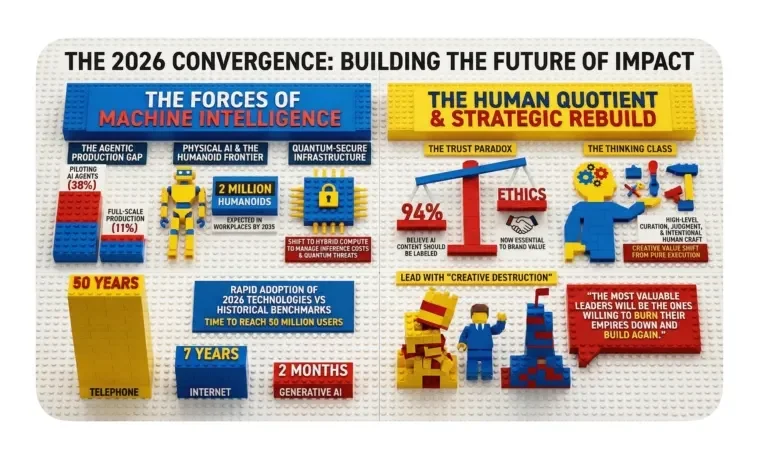
“The most valuable leaders in the convergence era won’t be the ones who built empires, but the ones willing to burn them down at the right moment, and build again,” Webb told the packed audience at SXSW.
Takeaway 1: The Death of the "Trend" and the Birth of Convergence
The "Convergence Era" marks a system-level change where multiple forces—technology, capital, geopolitics, climate, and human behavior—collide to reconfigure the future simultaneously. As Amy Webb’s Future Today Strategy Group (FTSG) argues, we are currently navigating a "Convergence Cycle" comparable to the Industrial Revolution or the Post-WWII era. In these cycles, general-purpose technologies reach operational scale at once, eroding the legitimacy of the old order.
Understanding individual trends is now insufficient because change spreads sideways as fast as it moves forward. Disruption is no longer a localized event; it is a structural composting of the old world into raw material for the next.
"The most valuable leaders in the convergence era won't be the ones who built empires, but the ones willing to burn them down at the right moment, and build again."
— Amy Webb, CEO of FTSG
Takeaway 2: The End of Search and the Rise of GEO
The way we find information is undergoing its first foundational rewrite since the 1990s. Traditional search engines, which directed users to a list of links, are being cannibalized by AI-driven "synthesized answers." This shift has birthed Generative Engine Optimization (GEO). In this new landscape, visibility is no longer about keyword density; it is about being cited and synthesized by the AI.
This requires a shift toward deeper, more opinionated content. A prime example discussed was Yahoo’s "Scout," an engine that provides visual, digestible answers. Yahoo CEO Jim Lanzone notes that Scout provides answers that have "personality" but "aren’t trying to act like your actual friend." This distinction is critical—users want authoritative synthesis, not a simulated relationship.

Takeaway 3: The "Silicon-Based Workforce" and the Agentic Reality Check
AI is transitioning from passive assistants to "Agentic AI"—autonomous systems capable of driving ROI. However, 2026 has brought a reality check: While 38% of organizations are piloting agents, only 11% have moved them into production (Deloitte). This "reality gap" exists because most organizations are merely automating legacy processes instead of redesigning them for a digital-first world.

According to Deloitte, the patterns of success for this new "silicon-based workforce" include:
Agent-First Process Redesign: Moving beyond automating human tasks to rethinking workflows for autonomous agents.
Multiagent Orchestration: Implementing frameworks that allow different agentic systems to communicate and collaborate.
Silicon-Based Workforce Management: Treating agents as workers who require onboarding, performance tracking, and FinOps cost management.
Takeaway 4: From "Human-First" to "Human-Preferred" Storytelling
In the creative world, the terminology has shifted from "Human-First" to "Human-Preferred." This acknowledges that while AI is permanent in the pipeline, the "human hand" remains the soul of the work. Director Steven Spielberg, discussing his creative process, famously compared the time-sucking nature of social media to being "abducted by aliens," losing "missing time" to the algorithm.
In this era, we are seeing the rise of "The Thinking Class." As Havas' Global Chief Data & Technology Officer Dan Hagen noted, the creative’s role is shifting from "execution" to "AI fluency" and high-level curation. Taste and judgment have become more valuable than the technical execution that AI can now handle at scale.

Takeaway 5: Physical AI and the 2 Million Humanoid Threshold
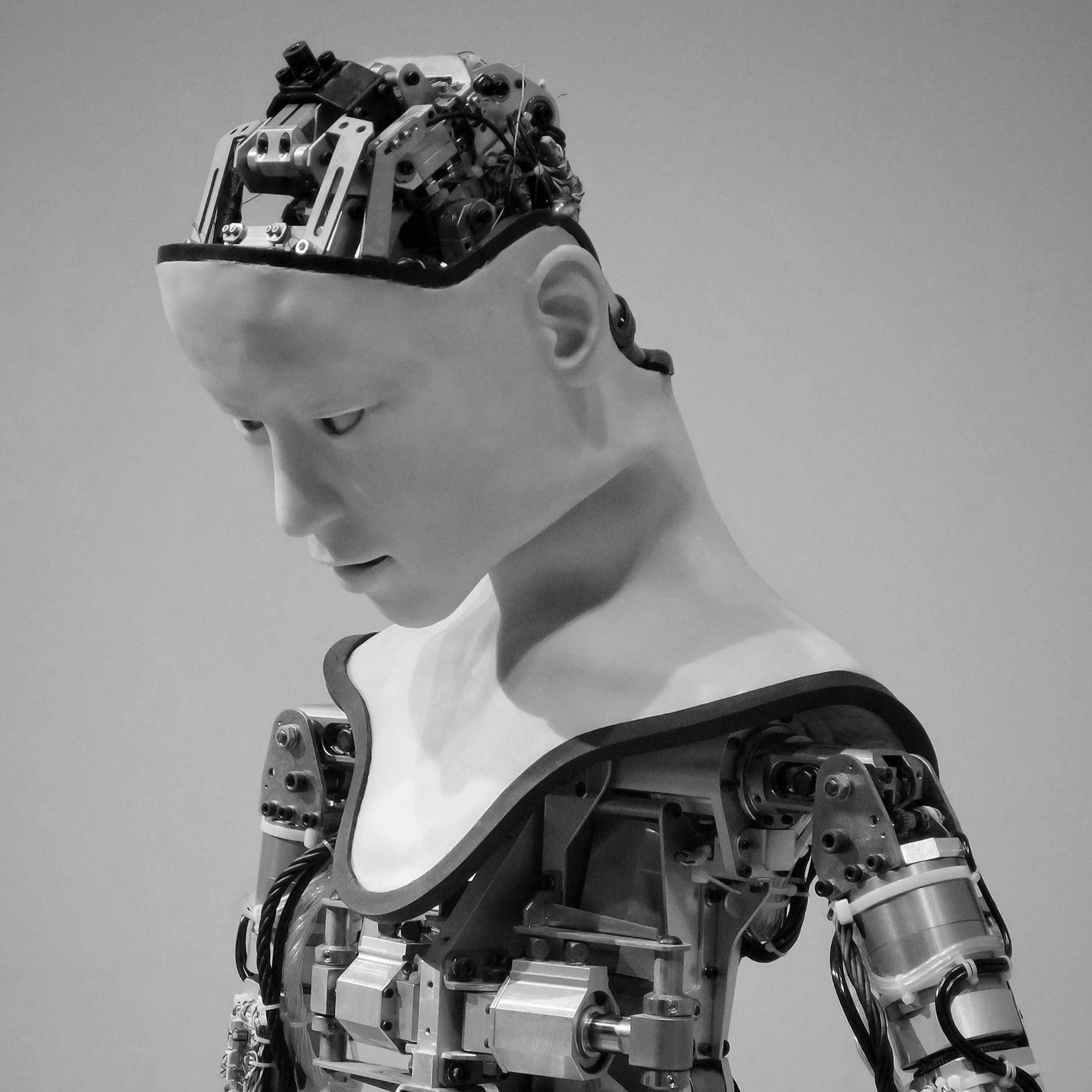
Intelligence is no longer confined to screens. We have entered the era of Physical AI, where machines interact with the 3D world in real-time. The projections are staggering: 2 million humanoids are expected in the workplace by 2035. This shift is driven by a 40% drop in humanoid manufacturing costs between 2023 and 2024, with unit costs projected to fall to 13k–17k in the next decade.
The humanoid form factor is a strategic choice, not just an aesthetic one.
"Our world is built for human bodies. That’s why the humanoid form factor is inevitable—it can navigate doorways, staircases, and factory floors without us having to rebuild our entire infrastructure."
— Jonathan Hurst, Oregon State University / Agility Robotics
Takeaway 6: The Trust Paradox and the Strategic Advantage of Labeling
As AI content becomes the default, brands are facing a "Trust Paradox." Data from the Webby Trend Report indicates that 94% of people believe AI content should be labeled, and 62% trust a brand more when they disclose AI usage.
Insights from Havas (Prose on Pixels) suggest that labeling is a strategic hedge against "synthetic slickness." Transparency is becoming a luxury good; by disclosing the use of AI, brands protect their long-term reputation and lean into the authenticity that consumers are starving for.

Takeaway 7: The "Corporate Panopticon" and the End of Anonymity
The darker side of convergence is the engineering of anonymity out of existence. Through what FTSG and CNET call "Continuous Authentication," we are entering a state where our face, gait, and voice identify us by default. This is authentication without our witting participation—a "subscription-based panopticon" where we finance our own surveillance through the smart devices and loyalty programs we once thought were optional.

Conclusion: The Crew of the Mission
The overarching theme of SXSW 2026 is that technology is no longer the bottleneck. We possess the tools to monitor the planet’s vital signs and automate the most complex labor, but we currently lack the strategic readiness to deploy them ethically.
As former NASA Deputy Administrator Dava Newman and astronaut Cady Coleman observed in their "Mission Briefing," we are no longer spectators of progress; we are the "crew in charge." Their message was blunt: "No one else is coming." There is no outside force coming to solve our global challenges of resource management or the ethics of machine intelligence.
The question for every leader in 2026 is a difficult one: Are you willing to burn down what worked yesterday to build what the future actually requires? Your answer will determine whether you are a passenger of the convergence, or its navigator.
A Call to Action for Leaders
The Convergence Outlook 2026 is explicitly designed to move beyond insight into consequence. Foresight without strategy, Webb emphasized, is insight without impact.
By mapping how convergences create net-new realities, the report equips organizations to position themselves ahead of disruptions before they fully materialize — and to make the hard choices required in an age of creative destruction.
Whether you lead a Fortune 500 company, a startup, a government agency, or a nonprofit, this new framework challenges you to stop watching trends in isolation and start navigating the collisions that will define the next decade.
Ready to explore the Convergence Outlook 2026?
The full report is available for download from the Future Today Strategy Group website. It’s more than a document — it’s a strategic operating system for the convergence era.
What convergence do you see hitting your industry first? Share your thoughts in the comments or reply to this newsletter.
Inspired by Amy Webb’s SXSW 2026 keynote and the official launch of the Convergence Outlook 2026.—Frank P. Neuhaus for iMB.Solutions
Creative Destruction on Purpose: Why Tomorrow’s Leaders Must Learn to Burn Their Own Empires Down
In her powerful SXSW 2026 keynote, futurist Amy Webb delivered a provocative message to business leaders: the most successful organizations of the next decade will be those willing to practice creative destruction on purpose.
Rather than waiting for disruptive market forces, new technologies, or nimble competitors to dismantle their business models, forward-thinking leaders must proactively choose to let go of the very products, services, and habits that once drove their success.
This deliberate act of “burning down” parts of their empire — before external pressures force them to — is no longer optional. It has become a core leadership competency in the age of convergences.

Why Creative Destruction Must Be Intentional
Past success creates dangerous inertia. What worked yesterday — high-margin products, proven business models, and deeply ingrained corporate habits — can quickly become tomorrow’s greatest vulnerabilities. In a world where AI, programmable biology, agentic systems, and geopolitical shifts collide at accelerating speed, clinging to legacy strengths is one of the fastest ways to become irrelevant.
Webb’s core challenge to executives:
“What are we willing to let die on purpose so that something more valuable can live?”
Five Deliberate Actions Leaders Must Take
To practice creative destruction effectively, leaders and organizations should adopt the following disciplined steps:
Ask the Difficult Questions Overcome the natural instinct to protect short-term margins and quarterly results. Instead, confront the hard truth: which legacy offerings, processes, or mental models no longer serve the future? Honest answers here separate survivors from casualties.
Reevaluate Strengths as Potential Vulnerabilities Today’s greatest competitive advantage can become tomorrow’s liability with shocking speed. Leaders must develop the humility and foresight to regularly examine their core strengths and ask whether they are still assets — or have quietly turned into anchors.
Leverage Strategic Foresight Tools Use powerful frameworks like the newly launched Convergence Outlook 2026 to spark meaningful debate inside the organization. These tools help confront cherished corporate beliefs, surface blind spots, and clarify exactly which initiatives should be accelerated, paused, or completely reframed.
Apply Dynamic Strategic Frameworks Implement structured processes that include:
Horizon scanning to identify which converging technologies (Compute Shock, Agentic Economy, Programmable Biology, etc.) will hit your industry first
Honest assessment of organizational readiness — culture, talent, and agility
Mapping of unexpected risks created by convergences
Rapid pivoting action plans that can be activated when timing demands it
5. Embed Foresight into Governance Make these practices sustainable by integrating scenario planning into annual strategy cycles, mandating technology literacy at the board level, and deliberately allocating capital that balances near-term returns with bold investments in emerging opportunities.
The New Definition of Great Leadership
In the convergence era, empire-building alone is no longer enough.
The most valuable leaders will be those courageous enough to burn down their own empires at the right moment — and then build again, faster and smarter than the competition.
They understand that in a world of rapid, system-level change, the ability to let go is just as critical as the ability to innovate.
As Amy Webb emphasized at SXSW 2026: the future belongs to organizations (and leaders) who don’t just adapt to disruption — they intentionally create it on their own terms.—Frank P. Neuhaus for iMB.Solutions
Agent-Native Operations: The Key to Unlocking True ROI from Agentic AI in 2026
Many organizations are excited about agentic AI, but they’re making a common mistake: simply layering AI agents on top of their existing, human-centric workflows. The real breakthrough comes when companies redesign operations to be agent-native — fundamentally reimagining how work gets done from end to end so that autonomous agents can thrive.
Rather than automating broken or inefficient processes, leading organizations are rebuilding workflows with AI agents in mind from the ground up. This shift is delivering significantly higher returns than traditional automation approaches.

Five Strategies for Successful Agent-Native Transformation
Here are the practical steps companies are using to move from pilot projects to transformative agent-native operations:
Stop “Paving the Cow Path” Instead of making minor automation tweaks to outdated processes, organizations should conduct thorough value stream mapping to understand how work should flow. For example, HPE chose a massive, end-to-end operational performance review process for their agent transformation. By tackling the entire workflow rather than isolated pain points, they achieved a genuine redesign instead of superficial fixes.
Target Composite Processes Early AI tools excelled at single tasks like writing code, but agent-native operations shine when handling composite processes that span multiple departments and domains. Multi-agent systems excel here by securely passing context between specialized agents and reasoning across organizational boundaries — something a single AI model struggles to do effectively.
Clean Data and Solidify Processes First AI is fundamentally a process improvement technology. Before deploying agents, companies must ensure they have clean, reliable data and crystal-clear visibility into their current operations. Applying AI to messy, unquantifiable, or poorly documented processes leads to guessing rather than measurable gains.
Deploy Multi-Agent Orchestration The most successful transformations move beyond monolithic AI models to a “microservices approach” with numerous smaller, highly specialized agents working together. At HPE, this looks like a single user-friendly front-end interface powered by four specialized agents that autonomously break down queries, analyze SQL data, generate charts, and translate insights into structured reports.
Bypass Legacy Bottlenecks Agent-native operations can elegantly bridge or bypass cumbersome legacy systems. Toyota, for instance, redesigned its supply chain tracking process by deploying an autonomous agent that monitors vehicle shipments in real time — eliminating the need for workers to manually navigate 50 to 100 different mainframe screens every morning.
The Discipline Required for Success
Building truly agent-native operations demands significant discipline. Leading companies enforce strict architectural reviews and require clear evidence of material ROI before scaling agents into production. They focus only on processes where agents can deliver tangible improvements to financial performance, customer experience, or operational efficiency.
This disciplined approach helps avoid wasted investment and ensures AI agents drive real business value rather than adding complexity to already inefficient workflows.
The Path Forward
In 2026, organizations that treat agentic AI as just another layer of automation will see limited returns. The real winners are those willing to redesign operations from the ground up to be agent-native — creating workflows where specialized AI agents can collaborate seamlessly, bypass legacy constraints, and deliver end-to-end transformation.
The result is faster, more intelligent operations that scale without proportional increases in headcount or cost.
Is your organization still layering agents onto old processes, or are you redesigning workflows to be truly agent-native? What’s the biggest composite process you’d like to transform with multi-agent systems? Share your thoughts and experiences in the comments below.
This article draws on real-world examples and best practices for agent-native transformation shared in enterprise AI discussions throughout 2026.
For more insights on agentic AI, multi-agent orchestration, and operational redesign, explore our ongoing coverage of the future of work and enterprise technology.—Frank P. Neuhaus for iMB.Solutions
The New Labor Equation: How Agentic AI Is Decoupling GDP from Human Labor in 2026
A profound structural shift is reshaping the global economy in 2026. For the first time in modern history, GDP is decoupling from human labor. This phenomenon, often referred to as the “New Labor Equation” or the era of “unlimited labor,” marks a fundamental break from centuries-old economic assumptions.

The Old Economic Model
For generations, economic growth and GDP were tightly linked to access to large pools of human labor. Traditional capitalism operated on the premise that human effort — whether physical or cognitive — was the essential input for production. This relationship underpinned wages, tax systems, social contracts, and nearly every measure of economic progress.
The Disruption: Agentic AI and Lights-Out Industrialism
That foundation is now crumbling.
The widespread deployment of agentic AI systems and “lights-out” industrialism — fully autonomous factories and operations designed to run 24/7 with zero human presence — is fundamentally changing the equation. AI agents can code, analyze, create, and execute complex multi-step tasks without fatigue. Robots and intelligent systems can build, inspect, deliver, and optimize processes continuously.
Human labor is no longer the primary engine driving economic output.
Unlimited Labor, Exponential Scale
Thanks to agentic AI, organizations can now achieve something previously impossible:
Scale without population growth
Massive output increases without corresponding wage costs
24/7 productivity without the limitations of human schedules, burnout, or labor shortages
Economic output can now expand exponentially while human headcount remains flat — or even decreases. This represents a clean break between human work hours and economic productivity.
The New Distribution of Wealth
This decoupling carries significant implications for how wealth is created and distributed. As automated capacity becomes the dominant driver of value, income and wealth are increasingly concentrating around the entities that own and control AI systems, infrastructure, and intellectual property — rather than the individuals who traditionally sold their physical or cognitive labor.
The “New Labor Equation” suggests a future in which productivity surges, but the traditional link between work and personal income weakens. This shift is forcing economists, policymakers, and business leaders to reconsider long-standing assumptions about employment, taxation, social safety nets, and the very nature of economic participation.
What This Means Moving Forward
In 2026, we are witnessing the early stages of a historic transition. The ability to generate economic value with minimal human labor input is unlocking unprecedented efficiency and growth potential. At the same time, it raises important questions about how societies will adapt to an economy where human labor is no longer the central driver of GDP.
The organizations and nations that best navigate this decoupling — by investing in agentic AI capabilities, rethinking workforce strategies, and designing new models for value distribution — will be best positioned to thrive in the coming decade.
How do you see the “New Labor Equation” affecting your industry or career? Will the decoupling of GDP from human labor create more opportunity or greater inequality? Share your thoughts in the comments below.
This article examines the emerging economic transformation driven by agentic AI and autonomous systems in 2026.
For more insights on the future of work, agentic AI economics, and the evolving relationship between technology and prosperity, explore our ongoing coverage of innovation and economic trends.—Frank P. Neuhaus for iMB.Solutions
The AI Inference Cost Crisis: Why Enterprise AI Spending Is Exploding in 2026
Despite a dramatic 280-fold drop in the cost of individual AI tokens over the past two years, overall enterprise spending on AI continues to surge. The reason is simple: the sheer volume of usage has grown far faster than the price reductions.
The primary culprit behind this financial pressure is agentic AI. Unlike traditional AI that responds to occasional prompts, agentic systems run continuously, performing ongoing inference across complex, multi-step workflows. This always-on nature causes token consumption — and costs — to spiral rapidly.
Many organizations are now facing a stark reality: standard cloud-based AI services are becoming prohibitively expensive. Some enterprises report monthly cloud bills reaching well into the tens of millions of dollars, creating significant strain even for large companies.

The Critical Financial Tipping Point
Experts have identified a clear threshold that signals when it’s time to rethink AI infrastructure strategy. When ongoing cloud costs for continuous inference workloads reach approximately 60% to 70% of the total cost of acquiring equivalent on-premises hardware, a tipping point occurs.
At this stage, it becomes significantly more economical for businesses to shift their predictable, high-volume workloads off the public cloud. Instead of treating these expenses as runaway operational costs (OpEx), companies can convert them into more predictable capital investments in private, on-premises infrastructure.
This move allows organizations to:
Gain better cost predictability
Maintain tighter control over performance and security
Avoid unpredictable cloud bill shock from continuous agentic AI usage
Why This Matters Now
In 2026, agentic AI is moving from experimental pilots to core business operations. As adoption accelerates, the economics of inference are forcing a strategic reckoning. Companies that continue running heavy, always-on workloads entirely in the public cloud risk unsustainable cost escalation.
Forward-thinking organizations are already evaluating hybrid and on-premises strategies to keep AI initiatives financially viable while scaling. The goal is no longer just technical capability — it’s sustainable, cost-effective intelligence at enterprise scale.
Looking Ahead
The inference cost crisis highlights a broader truth: AI’s long-term success will depend as much on smart infrastructure and financial discipline as on model performance. Businesses that proactively manage the economics of continuous inference — by hitting that 60-70% tipping point strategically — will be best positioned to harness agentic AI without jeopardizing profitability.
Has your organization hit the AI inference cost tipping point yet? Are you still running most workloads in the cloud, or exploring on-premises and hybrid options? Share your experiences or concerns in the comments below.
This article reflects current enterprise AI cost dynamics and infrastructure strategies observed in 2026.
For more insights on AI economics, hybrid cloud architecture, and sustainable agentic AI deployment, explore our ongoing coverage of enterprise technology and innovation.—Frank P. Neuhaus for iMB.Solutions
Lights-Out Factories and the New Labor Equation: How “Unlimited Labor” Is Decoupling GDP from Human Work in 2026
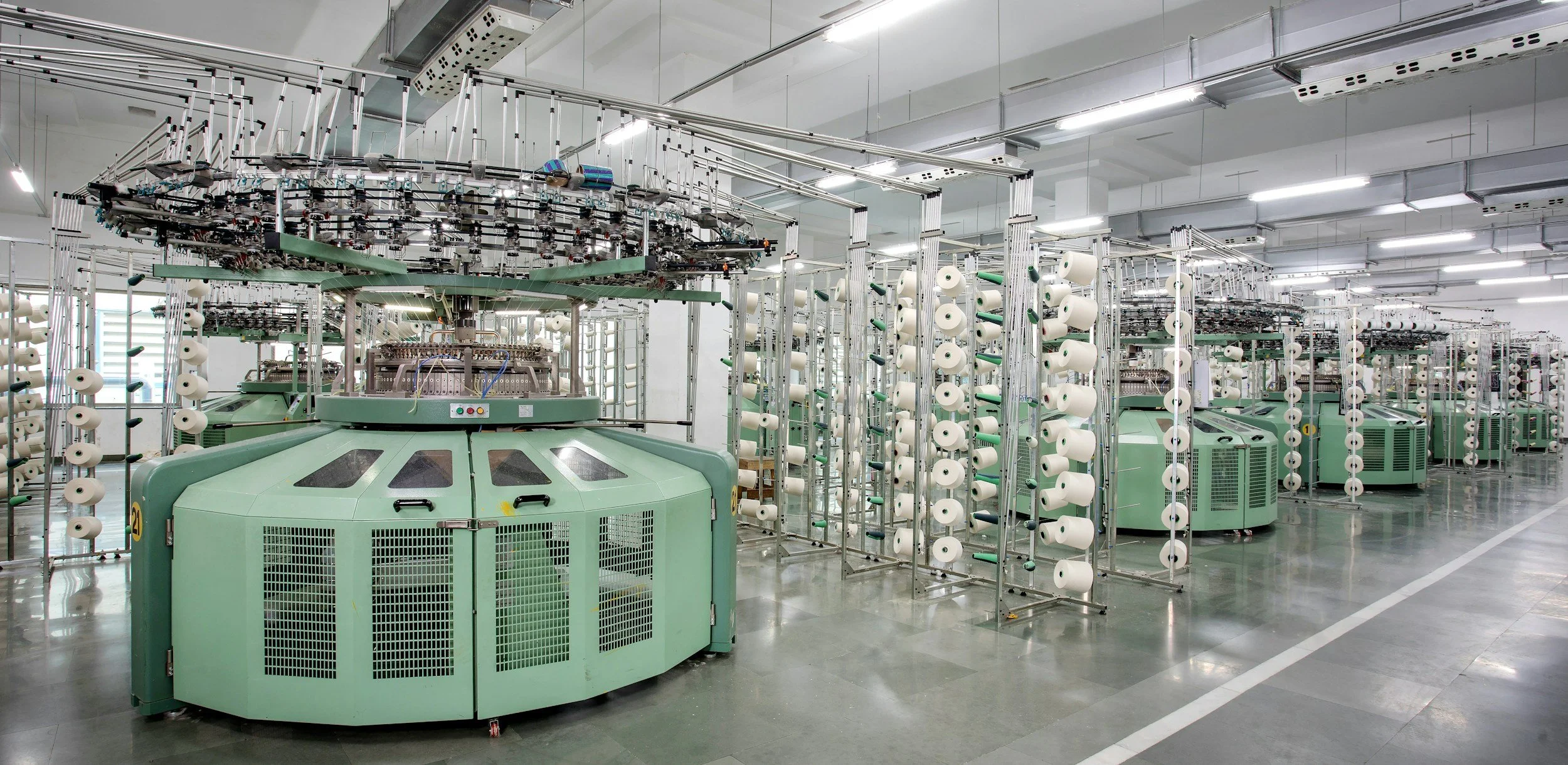
A quiet but profound revolution is underway in industrial production. “Lights-out factories” — also known as lights-out industrialism — are facilities designed from the ground up to operate 24/7 with zero human presence. Powered by agentic AI for intelligent management and advanced robotics for physical execution, these self-optimizing systems represent the purest expression of “unlimited labor.”
This development is accelerating a structural economic shift known as the New Labor Equation, where GDP is rapidly decoupling from human labor for the first time in modern history.

The End of the Old Economic Assumption
For centuries, capitalism rested on a simple premise: human effort is the essential input for production. Wages, tax bases, social contracts, and measures of economic growth all depended on large pools of human labor.
Lights-out factories completely invert this model. Instead of retrofitting old plants with automation, these new facilities are purpose-built for autonomy. Agentic AI orchestrates operations, while robots handle physical tasks without fatigue, breaks, or geographical constraints. The result? Production can now scale exponentially without any corresponding increase in human headcount.
Organizations can achieve scale without population, output without wages, and production without people. Human labor is no longer the primary engine of economic growth — it has been replaced by unlimited, tireless silicon-based capacity.
Profound Social and Economic Implications
This decoupling carries far-reaching and potentially destabilizing consequences:
Extreme Concentration of Wealth and Power As economic value shifts away from human labor, income and influence are concentrating among the owners of automated systems, AI models, and robotic infrastructure, while those who once sold their physical or cognitive labor are left behind.
Mass Economic Uncertainty Society may soon face a paradoxical situation: record GDP and corporate profits alongside soaring unemployment. An economy that thrives productively may simultaneously have “no use” for large segments of the population, creating widespread financial instability.
Risk of Civil Unrest and Political Extremism History shows that rapid economic displacement on this scale often leads to societal fracturing. Experts warn of potential global unrest, with displaced workers protesting roles that were simply “not renewed” because machines now perform them. Vulnerable populations could increasingly turn toward extreme political movements.
The Urgent Need for a New Social Contract To avoid a one-way extraction of wealth, society must develop radical new frameworks for sharing the gains of automation. One promising idea is the “Contribution Credit” system, which would allocate a percentage of automation-generated earnings to humans who provide visible and “invisible” labor — such as caregiving, mentorship, community building, and creative intellectual property.
How Governments Can Prepare for the Transition
Policymakers and global leaders are beginning to outline proactive responses to mitigate the risks of this historic shift:
New Social Safety Nets and Economic Frameworks Traditional systems tied to human wages and taxes are becoming obsolete. Governments are exploring Contribution Credits, Universal Basic Income (UBI) pilots powered by instant payment systems like FedNow, and other mechanisms to redistribute automation wealth more equitably.
Balanced Workforce Protections Labor policies must balance massive productivity gains with protections and reskilling programs for transitioning workers. Proactive, ethical approaches to automation can build public trust and ensure broader sharing of AI-driven benefits.
Robust AI Governance and Risk Management Governments are urged to collaborate with tech companies on strong governance frameworks. This includes investing in secure platforms (such as confidential computing), using AI for fraud detection and risk monitoring, and preparing public services for an automated future.
Clear and Harmonized Regulatory Frameworks Comprehensive, predictable regulations are needed to give businesses legal certainty in an increasingly automated economy. International harmonization will help prevent a fragmented global tech landscape.
Increasing Global AI Access To prevent extreme concentration of power, deliberate efforts must expand AI access to developing economies and underprivileged communities, ensuring the benefits of unlimited labor are more widely distributed.
Navigating the Silicon-Based Future
The transition to lights-out factories and unlimited labor offers enormous potential for productivity and prosperity. Yet without thoughtful adaptation, it risks creating a highly efficient economy that leaves many people behind.
The coming years will test our ability to redesign not just factories and workflows, but the very social contracts that hold societies together. Capital markets, governments, and corporations must work together to ensure the gains of automation are shared broadly enough for society to thrive alongside its machines.
What are your biggest hopes or concerns about the rise of lights-out factories and the decoupling of GDP from human labor? Do you support ideas like Contribution Credits or UBI as part of a new social contract? Share your perspective in the comments below.
This article explores the economic and social implications of lights-out industrialism and agentic AI based on trends emerging in 2026.
For more insights on the future of work, agentic AI economics, and the evolving relationship between technology and society, explore our ongoing coverage of innovation and economic transformation.—Frank P. Neuhaus for iMB.Solutions
SXSW 2026 Austin Texas: Blockchain and NFTs Take a Back Seat as AI Dominates South by Southwest Festival
Austin, Texas — March 12–18, 2026, brought the 40th anniversary of SXSW Austin 2026, one of the biggest tech, music, and culture events in the world. With the Austin Convention Center under renovation, the festival spread across downtown Austin in a decentralized format, but the big story for local tech watchers was clear: blockchain technology and NFTs played a much smaller role than in previous years, while artificial intelligence completely stole the spotlight at South by Southwest Austin Texas.
If you searched for “crypto at SXSW 2026 Austin” or “NFTs SXSW Austin,” you probably noticed the difference right away. Gone were the massive NFT gallery takeovers and blockchain-branded parties that defined 2022. In their place? Thoughtful conversations about how blockchain fits into an AI-first future.

Why Blockchain and NFTs Felt Quieter at SXSW Austin 2026
The shift was impossible to miss. Official panels and keynotes at SXSW Austin focused heavily on AI’s impact on business, creativity, and daily life. Blockchain sessions still happened, but they almost always tied back to AI convergence — topics like decentralized compute, verifiable AI data, tokenized models, and autonomous AI agents that can own and spend crypto.
A standout keynote titled “How Crypto Is Building New Capital Markets for Everyone, not just Wall Street” drew crowds at the Austin festival. Speakers from the Solana Foundation and Foundation Capital explained how on-chain tools are now creating real funding paths for creators and everyday Texans — moving far beyond speculation.
Must-See Crypto Moments That Still Mattered in Austin
Even with reduced hype, blockchain had its Austin highlights:
The National Cryptocurrency Association (NCA) ran a full education track across Austin venues. Mentor sessions on blockchain, crypto, and fintech filled the Hilton Austin, while the “Crypto Curious Meet Up” at the JW Marriott welcomed beginners. Their “Crypto Confessions” booth and “Crypto Convergence” panel helped locals understand practical utility without the jargon.
Ledger’s activation with the San Antonio Spurs — the Ledger x Spurs Hoops experience — gave Austin visitors a chance to win Bitcoin and exclusive merch while learning digital security.
No giant NFT drops or co-created collectible events took over downtown Austin this year, signaling that NFTs have matured into utility tools rather than hype drivers.
What This Means for Austin’s Tech Scene
For Austin entrepreneurs, developers, and investors, SXSW 2026 Austin Texas showed that blockchain isn’t disappearing — it’s evolving. The festival highlighted blockchain as the trusted layer that makes AI safer, more decentralized, and more accessible. Sessions like “The Internet of Value Meets the Internet of Intelligence” explored how programmable money and AI agents could reshape everything from local marketing to new economic models right here in Austin.
The takeaway for the Austin tech community? Crypto is no longer chasing viral moments at South by Southwest. Instead, it’s building quiet infrastructure for the AI revolution — exactly the kind of practical innovation that fits Austin’s “keep it weird but make it work” spirit.
Whether you’re a blockchain builder in East Austin, an NFT artist in South Congress, or just crypto-curious in the Hill Country, SXSW 2026 proved the technology is maturing in Texas. The spotlight may have moved to AI, but blockchain and NFTs are now positioned as essential supporting players in the next chapter of Austin’s tech story.—Frank P. Neuhaus for iMB.Solutions
Disclaimer
In preparing this newsletter/blog/audio blog/podcast/video, we used the following AI-based tools: OneBizTutor, our agentic AI platform applied within our project missions. Google Gemini Notebook Pro, to review and scan source materials and support the identification of relevant literature. Grammarly Pro, for language and grammar correction, and stylistic guidance on sentence clarity. Claude (Sonnet 4.5), Anthropic, for brainstorming ideas, formulating clear phrasing concepts we had already developed, structuring sections and arguments, and iterative editing support during the drafting and revision process. None of these generated the content of this newsletter and/or blog. The research question, the design and conduct of project missions and relevant market research for clients, the data collection, the analysis, and the interpretation of findings are our own independent work. Where AI tools were used for language or formulation support, the underlying ideas and arguments originated from us. All AI-assisted text was critically reviewed, verified, and edited before inclusion.
Contact

Discover What Matters Most to You—Backed by 150+ Project Missions!
Curious about the impact of our insights at iMB.Solutions? We put our articles, blogs, and case studies to the test—running three independent AI-driven queries with Perplexity, Google Gemini, and Mistral. The result? A powerful keyword cloud reflecting the topics that truly resonate.
Do you see yourself in these trends? Let’s connect and explore how our expertise—shaped by 150+ project missions over two decades—can drive your success.