

GreyRhino Newsletter Edition July 2026

Prime Story

Brazil’s Silent Revolution: Why 14,000 Buses Are About to Go Electric—And Why the World is Watching
Intro
At the end of Q2 2025, we launched a project for a European company in the mobility industry to enter the Brazilian market for electric buses and public transit systems. The project was recently successfully delivered. In consultation with our client, we will begin publishing a detailed analysis of the market environment starting with this newsletter, followed by the actual business case in a later phase.

busses circulating at Avenida Paulista, São Paulo, Brazil (2025), image captured by Frank P. Neuhaus
The Hook: Beyond the Diesel Cloud
For decades, the rhythm of Brazilian cities has been dictated by the heavy roar of diesel engines and the inescapable soot of exhaust. For urban planners across the Global South, a quiet, zero-emission transit network long felt like a "distant dream"—a luxury for the wealthy capitals of Europe or China.
That myth is evaporating. Brazil is no longer just running pilot projects; it has transformed into a strategic laboratory for industrial-scale e-mobility. This is a massive shift from "unstructured family-owned businesses" to bankable infrastructure projects. By leveraging innovative financial models and a robust domestic manufacturing base, Brazil is proving that the transition to electric transit isn't just an environmental necessity—it is an economic imperative.
The "14,000" Revelation: Immediate Operational Opportunity
A groundbreaking study by the Institute for Transportation and Development Policy (ITDP), titled "Accelerating the Transition," has dispelled the notion that electrification requires a radical overhaul of city planning. The data reveals a "low-hanging fruit" opportunity centered on the 18 largest metropolitan systems in the country.
Core Findings from the ITDP Study:
14,146 Diesel Buses: This is the specific number of vehicles—primarily those over five years old (meeting obsolete Euro III to Euro V standards)—ready for immediate replacement.
Operational Compatibility: The energy consumption of these existing diesel routes matches the performance of e-bus models currently available on the domestic market.
24.6% Emissions Reduction: Replacing these specific legacy vehicles would slash annual greenhouse gas (GHG) emissions by nearly a quarter without requiring a single change to route structures or fleet size.
Strategic Insight
For skeptical city planners, this "operational compatibility" is the ultimate de-risking factor. It proves that electrification is not a disruption of service, but a drop-in upgrade that uses existing infrastructure to deliver immediate environmental and mechanical gains.
The Industrial Ecosystem: De-bottlenecking National Production
While global giants eye Latin America, Brazil is cultivating a competitive domestic hub. Eletra, a national powerhouse founded in 1988, currently holds over 60% of the national market. To solidify this lead, Eletra invested R$40 million in its São Bernardo do Campo facility, boosting annual capacity to 3,000 vehicles.
However, Brazil’s strategy isn’t a one-company show. The ecosystem is anchored by giants like Mercedes-Benz do Brasil (producing the eO500U chassis in São Bernardo), Volvo (manufacturing articulated electric models), and WEG, which provides the high-tech powertrains and battery systems.
"This is an important opportunity for the resources of the Climate Fund to reach the top, for both micro and small companies, generating results for the reduction of emissions and efficiency gains," says Petrônio Cançado, Partner & Head of Credit at OCCAM Brasil.
The "Accreditation" Advantage
A critical strategic shift is the new 30% Accreditation Index, which replaced the rigid 60% Nationalization Index. This policy "de-bottlenecks" the industry, allowing manufacturers to import high-tech components like battery cells while still qualifying for low-interest BNDES financing. By focusing on "technological content" and "innovation" rather than just weight, Brazil is ensuring its buses are globally competitive while remaining "nationally manufactured" for financing purposes.
The Billion-Real Savings: São Paulo’s CAPEX Magic
The primary barrier to adoption remains the upfront cost—e-buses are typically 3x to 4x more expensive than diesel. São Paulo has solved this with a "Partial Subvention" model that shifts the burden of high interest rates away from the private sector.
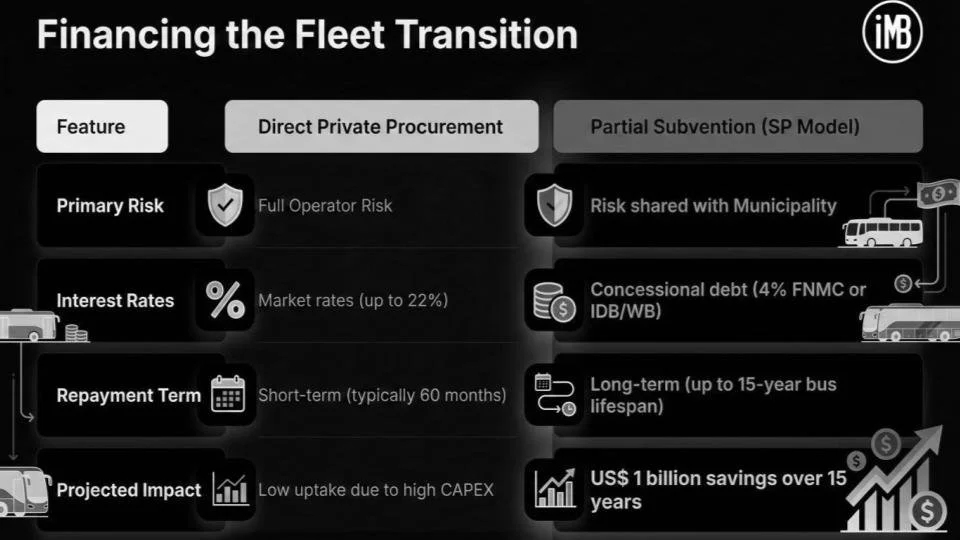
extracted from project milestone presentation Q1 2026, reworked to protect the client company (July 2026), iMB.Solutions Ltda., São Paulo, Brazil
The Secret Sauce
e-buses are often non-viable under traditional Internal Rate of Return (IRR)-based concessions. The "Partial Subvention" allows the city to reallocate public resources from volatile diesel subsidies (OPEX) to long-term electrification (CAPEX). Because the city government can contract cheaper debt than private operators, the transition actually lowers the total financial burden on the municipal budget.
The TCO Flip: Monetizing the Transition
The Total Cost of Ownership (TCO) for e-buses is now hitting a tipping point. While the "sticker price" is high, the 15-year lifecycle provides a superior return on investment.
30% Lower Energy/Maintenance: Simplified drivetrains eliminate the mechanical complexity of internal combustion, and electricity prices are far more stable than diesel.
Extended Service Life: E-buses are engineered for a 15-year service life, outlasting the 10-year replacement cycle of diesel models.
7% Annual Battery Cost Drop: Rapidly advancing density continues to lower the cost of the vehicle’s most expensive component.
Carbon Monetization
A "surprising shift" in the financial landscape is the role of Caixa Econômica Federal (CEF). CEF is establishing a specialized carbon credit aggregation and trading service. This allows even small municipalities to monetize their emissions reductions in the voluntary market, creating a new revenue stream that offsets financing costs. When combined with the estimated R$ 54.4 – R$ 62.1 million in annual Social Cost of Carbon (SCC) savings, the "green" choice becomes the only logical fiscal choice.
The Human Dividend: Technology as an Equity Tool
This transition is about more than just air quality; it’s a tool for social inclusion under the Brazilian "REFRATA" and "PAC" programs.
Job Creation: Developing the domestic electric bus chain could generate 280,300 new direct jobs by 2030 in high-skilled manufacturing and tech roles.
Gender Equity: As electronic ticketing reduces the need for fare collectors—a role historically held by women—new training initiatives are moving these workers into high-skilled roles as e-bus drivers and technicians. Technology is essentially acting as a bridge from low-wage administrative roles to the green economy.
Conclusion: The Race to 2026
Brazil is sprinting to lead the Latin American electrified fleet by 2026, aiming to surpass Chile (2,655 buses) and Colombia (1,590). A cornerstone of this effort is the US$ 500M World Bank "MPA Phase 1 Caixa" project.
Crucially, this program includes a Project Development Facility (PDF). This isn't just technical support; it’s a mechanism to solve the "low institutional capacity" that previously led to failed e-bus tenders in cities like Curitiba and Belém. By helping municipalities move from unstructured businesses to "bankable" infrastructure projects, the PDF ensures that private capital can eventually take over the driver's seat.
As the world’s third-largest bus producer bets its entire industrial future on electricity, a question remains for urban leaders everywhere:
"If an industrial titan like Brazil is proving that electric transit is cheaper, safer, and more social, how much longer can your city afford the high cost of staying on diesel?"
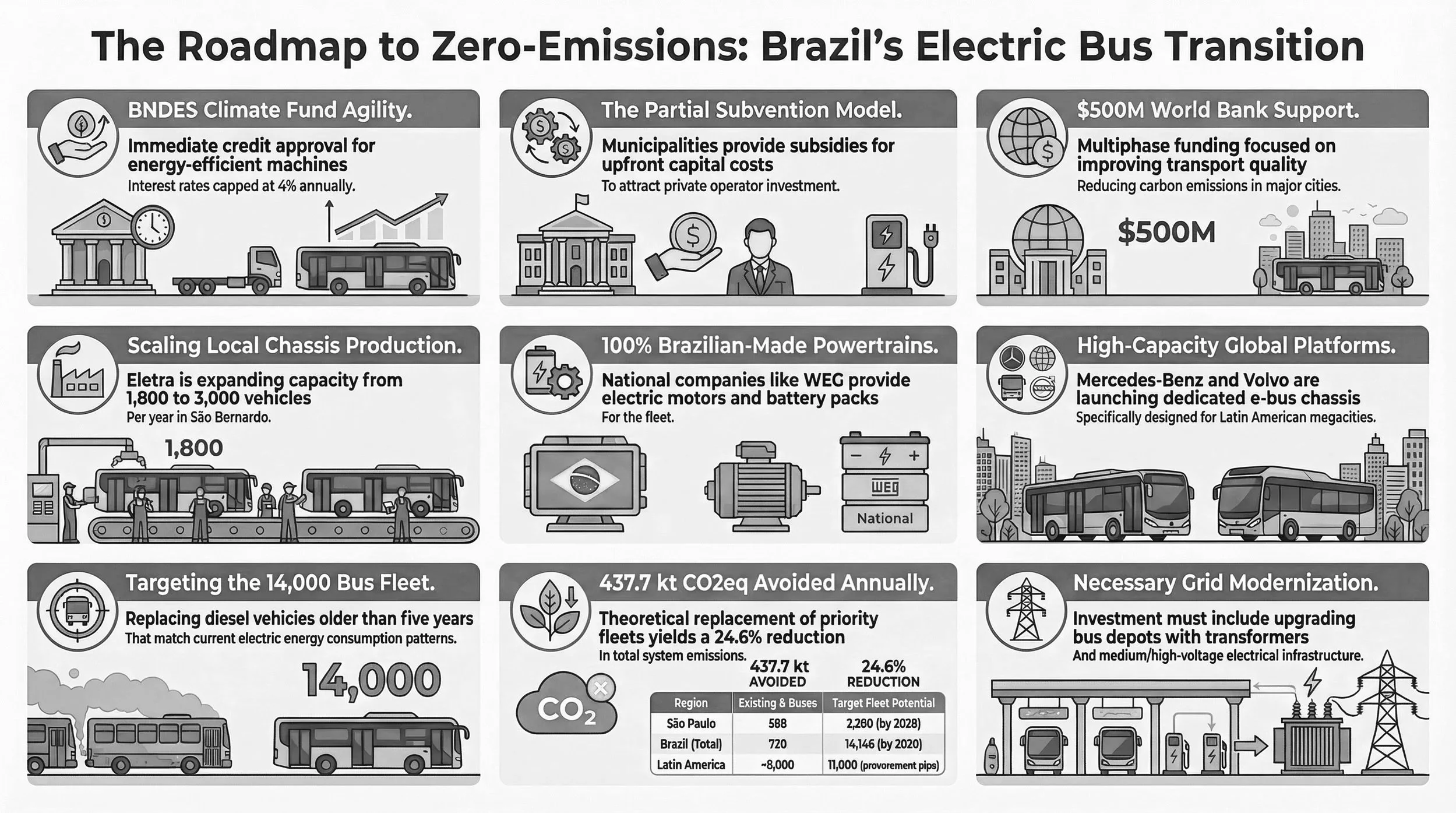
extracted from project milestone presentation Q1 2026, reworked to protect the client company (July 2026), iMB.Solutions Ltda., São Paulo, Brazil
About three weeks ago, the city government of São Paulo received an additional 500 electric e-buses from Elektra and Volkswagen Trucks & Buses, bringing the total number of vehicles in operation to 1,700. By the end of 2028, at least 2,200 e-buses are expected to be in service in São Paulo.
In a conservative estimate for Brazil, the ICCT concludes that by 2030, at least 21% of all public transit vehicles sold will be electric buses; by 2024, this figure will reach at least 62%, and by 2050, it will have risen to 92%.
According to information from Volkswagen Trucks & Buses Brazil, the company is preparing its local operations for the export market. The Mexican market is already being targeted, as are other South American countries.
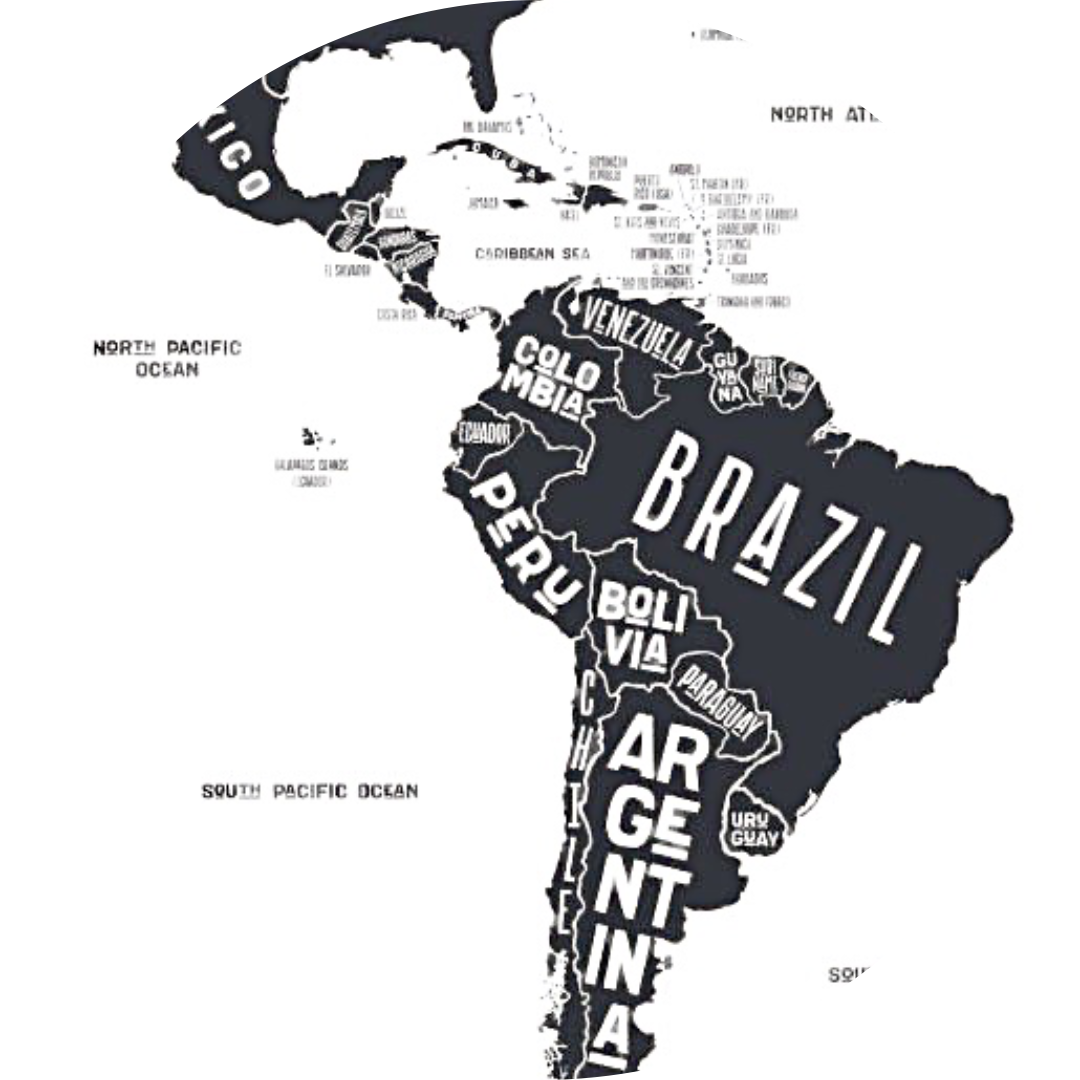
The LatAm Story
Hyundai Weighs Major Mexico Expansion: Potential US$2 Billion Plant in the Works
By iMB.Solutions MEX Team | Automotive Insights July 2026
Hyundai Motor is seriously considering a significant boost to its operations in Mexico. The South Korean automaker is evaluating the construction of a new vehicle manufacturing plant with an investment potentially exceeding US$2 billion and an annual production capacity of 250,000 to 300,000 vehicles.
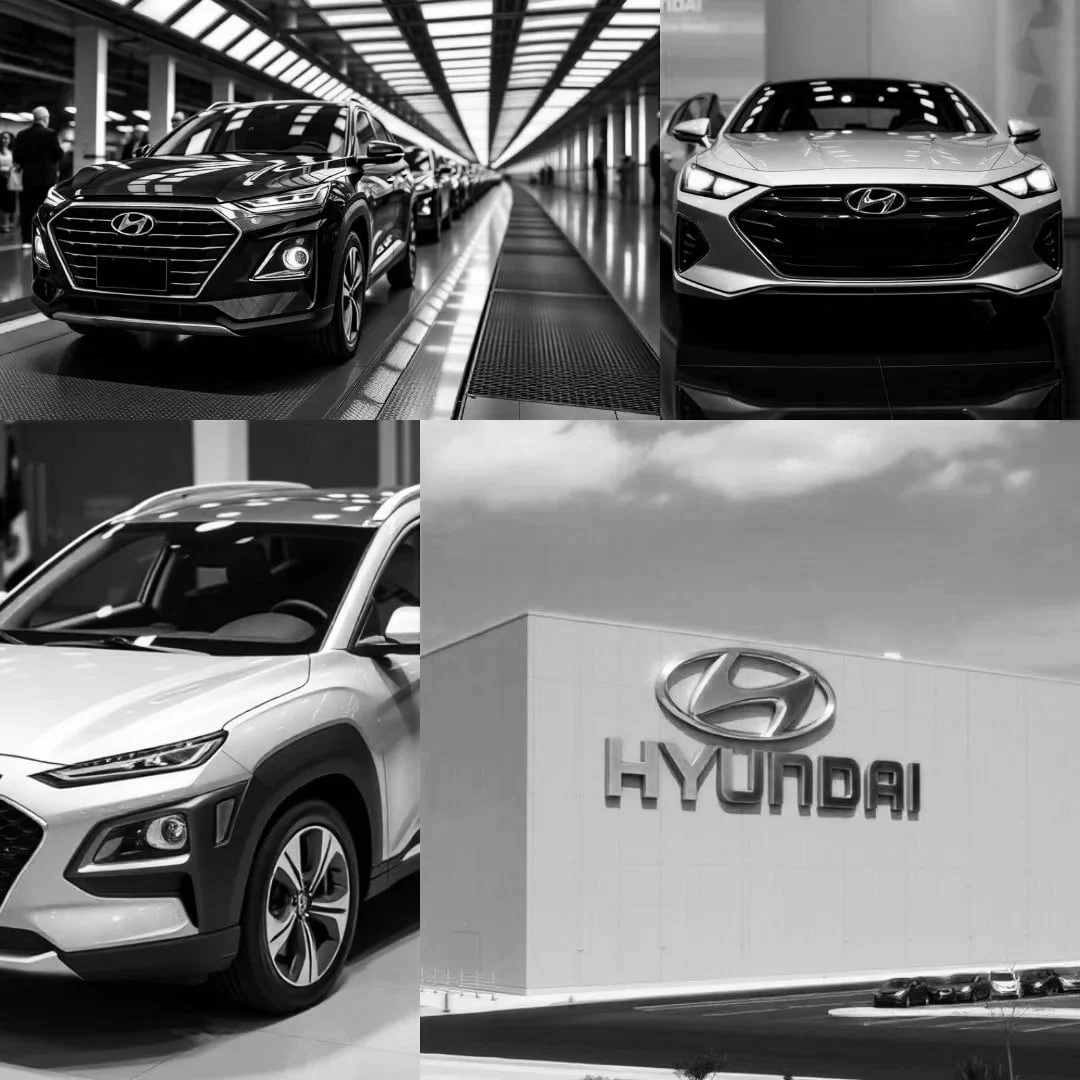
image portfolio manipulated with Google generative AI application, Jun. 22, 2026, Monterrey, Mexico
Key Factors Hanging in the Balance
According to Edgar Carranza, CEO of Hyundai Mexico, the final decision hinges on two major developments:
The upcoming review of the United States-Mexico-Canada Agreement (USMCA) — favorable outcomes could make Mexico an even more competitive manufacturing destination.
Progress on a bilateral free trade agreement between Mexico and South Korea, which has been under discussion for years.
It is clear that both elements would create a strong environment for new investment, building on Hyundai's already substantial footprint in Mexico.
Hyundai's Current Presence in Mexico
Hyundai Motor Group has already invested more than US$2.5 billion in the country, supporting over 12,500 direct jobs across manufacturing, distribution, and supplier operations. A new assembly plant would mark the next major phase of expansion, potentially generating hundreds of additional jobs in the supply chain.
Navigating Trade Challenges and Opportunities
Mexico's recent implementation of tariffs (ranging from 5% to 50%) on imports from non-FTA countries has impacted Hyundai's imported vehicle lineup, affecting roughly 80% of its imports with rates jumping from 20% to 50%. Despite these pressures, the company has maintained competitive pricing and reported steady sales growth.
From January to May 2026, Hyundai sold 21,454 vehicles in Mexico (up 2.5% year-over-year).
May sales reached 4,652 units (up 3% month-over-month).
The brand holds a 3.4% market share, ranking among Mexico’s top 10 vehicle brands.
Customer loyalty remains strong, with over 90% of Hyundai customers in Mexico recommending the brand.
Broader Context
This potential investment aligns with Mexico’s growing role as a manufacturing hub for global automakers, leveraging its position under the USMCA for exports to the U.S. and Canada. South Korean firms like Hyundai, Kia, Samsung, and LG continue to deepen their industrial presence in the country.
Trade between Mexico and South Korea is expanding, with Mexican exports to South Korea reaching US$6.603 billion in 2025 (up 7.1%). Hyundai views a stronger trade framework as a long-term strategic advantage.
What This Means
A new Hyundai plant would further solidify Mexico’s appeal for nearshoring and foreign direct investment in the automotive sector. Industry watchers will be closely monitoring the USMCA review and Mexico-South Korea trade talks for signals on whether this ambitious project moves forward.
Stay tuned for updates on this developing story and other key developments shaping the automotive landscape in Mexico and beyond.
iMB.Solutions Brazil executed more than 20% of all project missions within the automotive sector, including Argentina. The iMB.Solutions Mexico Team applied interim and project managers for this industry in more than 40% of all project missions.
Generative AI Tools in Project Missions
Step into the AI Arsenal: the cutting-edge generative tools we deploy in client projects, internal operations, and partner collaborations—tested, trusted, and ready for battle.
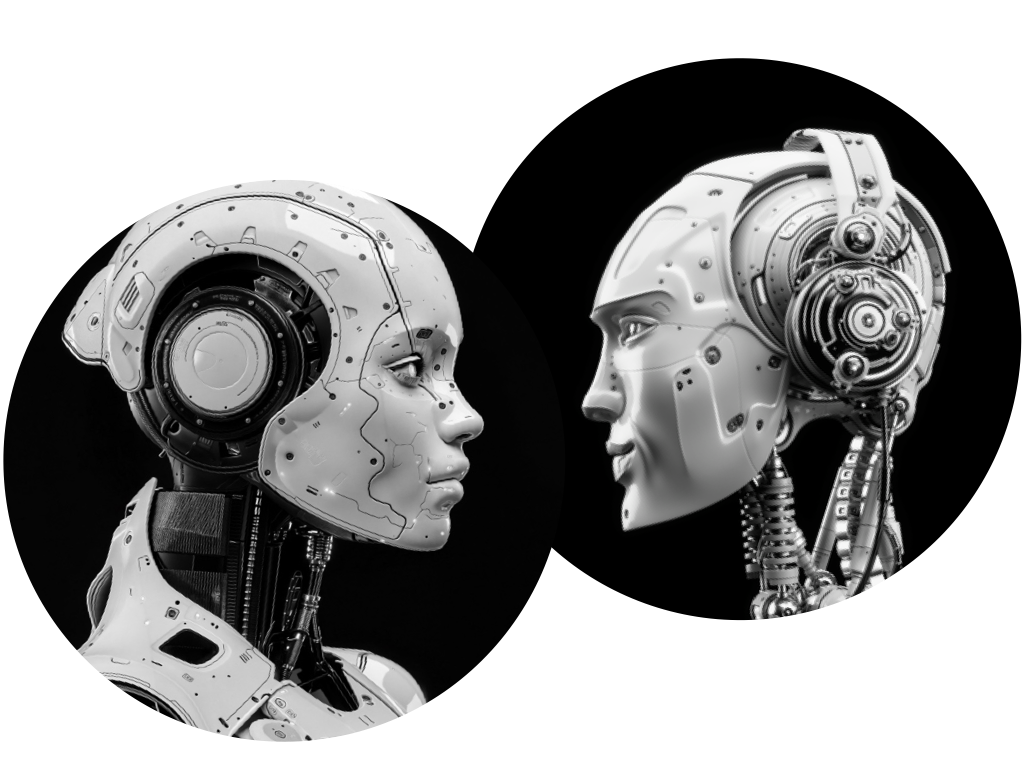
The Trap of "Build Me an Agent" – And How to Escape It
In the whirlwind of AI hype, at iMB.Solutions we've lost count of how many times we've heard the phrase: "Just build me an agent."
It sounds decisive. It feels proactive. But here's our strong opinion – and we say this with conviction after two years steering AI initiatives:
"Build me an agent" is not a requirement. It's a symptom.
A symptom of what, exactly? Of skipping the foundational thinking that separates flashy experiments from transformative breakthroughs. It's the equivalent of saying "Build me a car" without defining where you're going, what terrain you'll cross, or how you'll measure if you've arrived faster and safer than before.
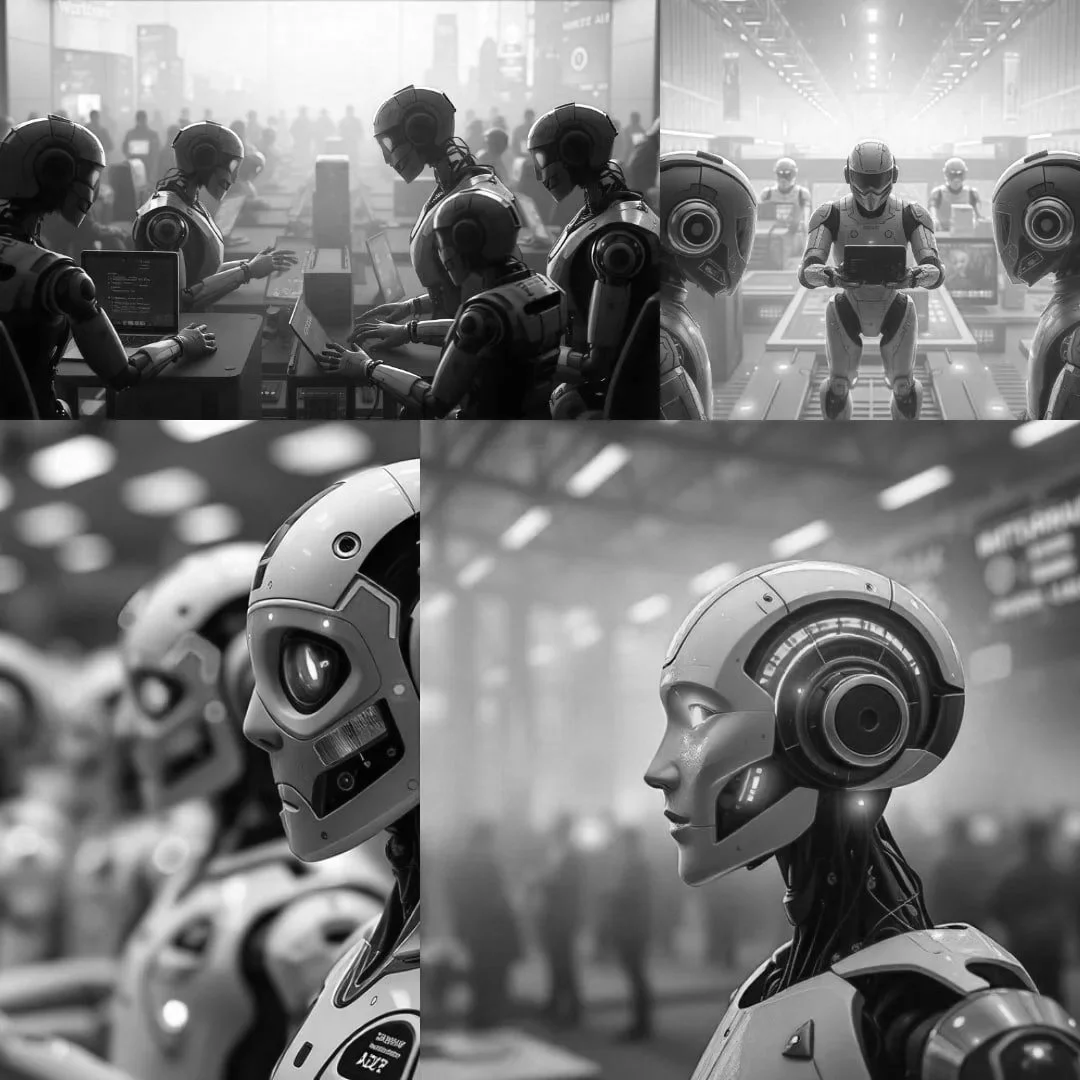
by Substack ai image generator, iMB.Solutions Ltda., São Paulo, Brazil, Jun. 23, 2026
The good news?
There's a powerfully simple antidote. And if you adopt it, you'll not only build better agents – you'll unlock outcomes that genuinely move the needle for your business, your team, and your customers.
The Right Starting Point: Three Essential Questions
Before writing a single line of prompt engineering or spinning up infrastructure, pause and demand clarity on these three pillars:
What outcome are we truly changing? Be ruthless here. Are we aiming to slash customer support resolution time by 40%? Boost sales conversion rates through hyper-personalized outreach? Accelerate internal decision-making with real-time insights? Vague goals like "make things more efficient" won't cut it. Define the specific, measurable human or business outcome you're targeting.
What’s the current baseline? You can't chart progress without knowing where you stand today. Map the existing process end-to-end: How long does it take? What are the error rates? Where are the bottlenecks and pain points? Quantify everything you can. This baseline becomes your North Star – and your proof point when skeptics ask, "Is this AI thing actually working?"
What does wild success actually look like? Dream big, but ground it in reality. Paint a vivid picture: Success might mean reducing manual effort by 80%, achieving 95% accuracy in automated tasks, or unlocking entirely new capabilities that weren't possible before. Define the metrics, the milestones, and even the "wow" moments that will signal you've nailed it.
Why This Approach Wins Every Time
When you lead with these questions, something magical happens:
Your agents become purpose-built rather than generic.
Stakeholder alignment skyrockets (no more endless debates mid-project).
ROI becomes crystal clear from day one.
And crucially, you avoid the graveyard of abandoned AI pilots that looked cool but delivered little value.
We have seen organizations transform once they shift from tool-first thinking to outcome-first strategy. The results? Faster deployment, higher adoption, and breakthroughs that compound over time.
Your Challenge This Month
Next time someone says "Build me an agent," gently redirect the conversation. Ask those three questions. Watch how the fog lifts and real innovation emerges.
What’s one AI project on your horizon right now? Reply to this newsletter and share – we would love to brainstorm how these questions could sharpen your approach. Together, we're not just building agents; we're engineering the future.—iMB.Solutions Ltda., São Paulo, Brazil
Get Out

One of the most iconic staircases in the world
As part of a project assignment for a client in the mining and commodities industry, I have been visiting the capital, Brasília, regularly over the past few months. After many years, I finally took the time to explore the city’s architecture a little more closely. One of the most impressive buildings is undoubtedly Brazil’s Ministry of Foreign Affairs—the Itamaraty.
Step into architectural poetry. This breathtaking cantilevered staircase floats inside the Itamaraty Palace (Ministry of Foreign Affairs) in Brasília, designed by the legendary Oscar Niemeyer.
A perfect blend of brutalist concrete, dramatic lines, and light that feels almost sculptural — it’s not just a way to go upstairs, it’s a statement of modern Brazilian design and ambition.
Would you climb it?

inside Itamaraty Palace, May 13, 2026 - 08:52:09 AM - Sony Alpha ILCE-6400 - Sigma 10-18mm f2.8 DC DN Contemporary 023 - ISO 800 - 15mm - f6.3 - 1/30s - Frank P. Neuhaus for LensOnChain®
Contact

Discover What Matters Most to You—Backed by 150+ Project Missions!
Curious about the impact of our insights at iMB.Solutions? We put our articles, blogs, and case studies to the test—running three independent AI-driven queries with Perplexity, Google Gemini, and Mistral. The result? A powerful keyword cloud reflecting the topics that truly resonate.
Do you see yourself in these trends? Let’s connect and explore how our expertise—shaped by 150+ project missions over two decades—can drive your success.