

GRhino Edition September 2026

Prime Story

Mercedes-Benz Trucks & Buses in Brazil and Argentina
A Comprehensive Overview of Production, Markets, and Strategic Development in South America
Introduction
Mercedes-Benz has been one of the most influential brands in the commercial vehicle segment in South America for decades. While the Brazilian plant in São Bernardo do Campo stands as the largest Mercedes-Benz commercial vehicle factory outside Germany and forms the industrial backbone of the region, the Argentine subsidiary marked an important strategic restart with the opening of the new Centro Industrial Zárate in May 2026. Both countries are closely interlinked: Brazil supplies components and expertise, while Argentina complements regional production and triers to strengthens export capabilities within Latin America.
Our newsletter article presents a concise yet comprehensive summary of the current activities and strategic position of Mercedes‑Benz Trucks and Bus in both countries. In recent years we have repeatedly undertaken project assignments with iMB.Solutions for commercial vehicle manufacturers and supplieres; in 2025/26 we additionally executed a project in the e‑bus industrial sector, among other related engagements.

photographies captured by Frank P. Neuhaus, São Paulo, Brazil (2025)
Brazil - The Industrial Powerhouse in São Bernardo do Campo
The plant in São Bernardo do Campo (ABC Paulista) was inaugurated in 1956 and remains the largest production site for Mercedes-Benz commercial vehicles outside Germany. On a vast area of approximately 2.6 million square meters, the facility manufactures not only complete vehicles but also key components:
Truck model ranges: Accelo (light-duty), Atego (medium-duty), Axor, Actros, and Arocs (heavy- and extra-heavy-duty)
Bus chassis: Urban and intercity models of the OF, OH, and O 500 series, including articulated and bi-articulated versions
Aggregates: Engines, transmissions, axles, and cabins
The plant is also home to the largest technological development center of the brand outside Europe and serves as a global competence center for bus chassis. Since 2018, the site has undergone a comprehensive transformation to Industry 4.0. Modern digital systems, connected logistics, big data analytics, and automated processes have significantly increased productivity and flexibility.
Current production figures indicate a daily output of around 200 vehicles (trucks and bus chassis combined). On peak days, this number can be exceeded. Exact monthly and annual production volumes fluctuate with demand but are substantial enough to cover the Brazilian domestic market as well as significant exports.
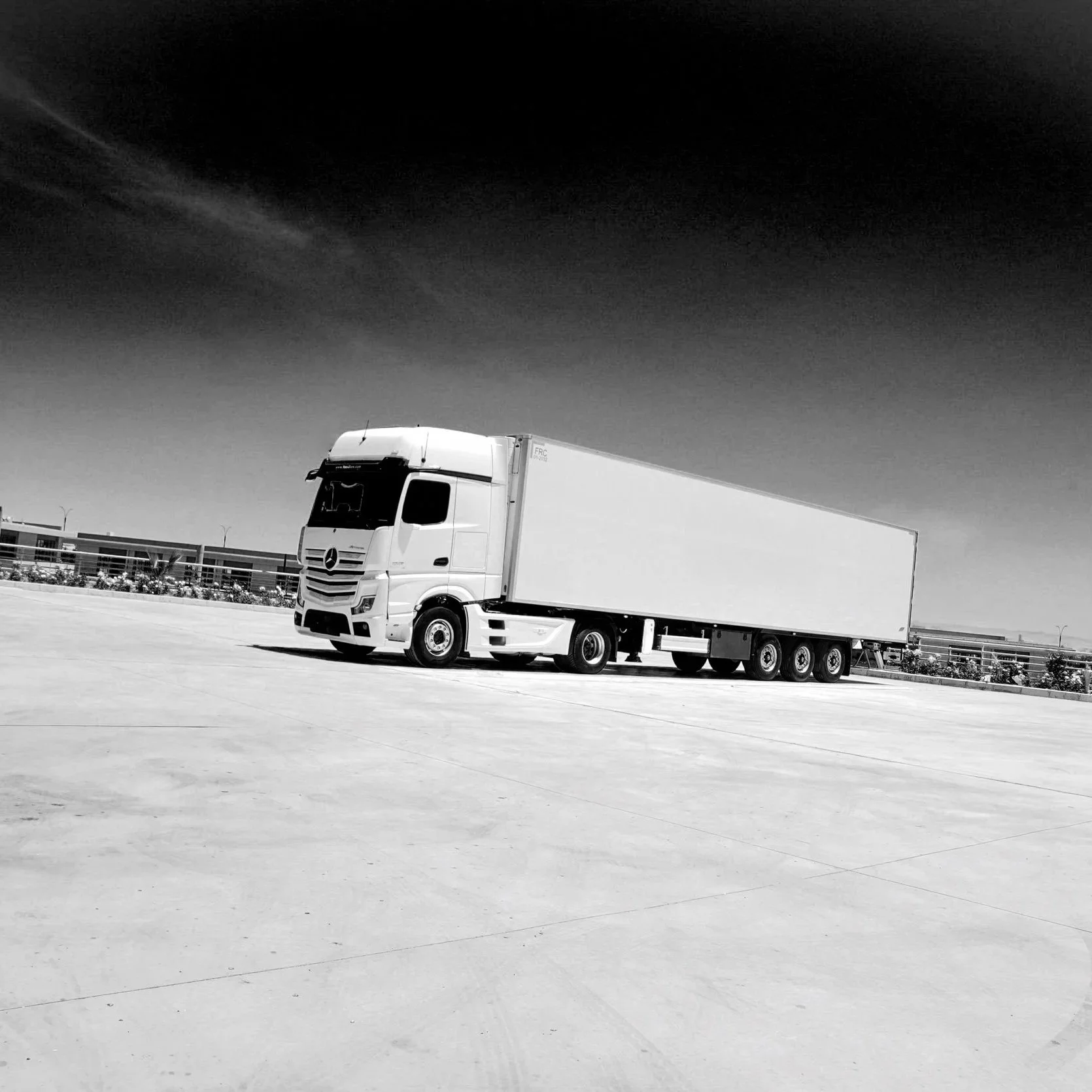
Electromobility in Brazil
A particular focus lies on electrification. The eO500U model — a battery-electric urban bus chassis measuring up to 13.2 meters in length with a range of up to 270 kilometers — has been in series production since the end of 2022. It was fully developed in Brazil to meet the requirements of Latin American cities.
In 2025, 222 units of the eO500U were registered; cumulative sales have already surpassed the 400 and later 500-unit marks. Additional large orders, particularly for São Paulo, are currently under negotiation. In parallel, the plant area dedicated to electric buses is being expanded to accommodate the planned articulated version eO500UA as well as future models. Production of the electric chassis takes place flexibly on the same line as the diesel models and is electrified only at a later stage of the process.
Brazil is thus the clear lead market and production hub for Mercedes-Benz electric buses in the region.

Avenida Paulista, São Paulo, Brazil, photography captured by Frank P. Neuhaus, São Paulo, Brazil (2026)
Argentina - A Fresh Start with the Centro Industrial Zárate
In Argentina, the structure has changed fundamentally in recent years. The passenger car and van division (including the historic Sprinter production) was transferred to the local group Prestige Auto. The commercial vehicle activities (Mercedes-Benz Camiones y Buses), however, remain under the umbrella of Daimler Truck and reached an important milestone in 2026.
On May 8, 2026, the new Centro Industrial Zárate was officially inaugurated. The investment amounted to 110 million US dollars. The modern facility is strategically located on National Route 9 near the port and replaces the previous production at the historic Virrey del Pino site.
The following models are currently manufactured in Zárate:
Trucks: Accelo and Atego
Bus chassis: OH and OF
The maximum production capacity is planned at up to 10,000 units per year (no deadline to reach full capacity). Today, the daily output accounts with approximately 17 vehicles (340 units per months max.; 9% of Brazilian output). Assembly is carried out predominantly under the CKD (Completely Knocked Down) process, with a large share of components supplied from the Brazilian plant in São Bernardo do Campo. The site also houses a Reman facility for remanufactured aggregates as well as a modern logistics center for spare parts.
Mercedes-Benz Argentina reports that this production capacity is entirely sufficient to meet the current demands of the domestic market. This is all the more surprising given that, according to the Argentine government, substantial investment volumes are supposedly flowing into the mining and agricultural industrial sectors, and the government’s RIGI investment program is explicitly intended to attract significant amounts of foreign capital. On the other hand, this comparatively low production figure aligns with the modest sales reported by other commercial vehicle manufacturers operating in Argentina. Overall, sales remain at a surprisingly low level, and forecasts for the remainder of the current 2026 fiscal year—as well as the tentative plans and outlook for 2027—appear decidedly pessimistic.
Mercedes-Benz has traditionally held a very strong market position in Argentina — particularly in the bus segment, where the brand has achieved market shares exceeding 60 percent for decades. The new plant is intended to safeguard this position while simultaneously improving export opportunities to other Latin American countries in the future.

Buenos Aires, Argentina
Electromobility in Argentina
Electric buses are not currently produced in Argentina. The eO500U chassis is imported from Brazil and can be fitted with locally manufactured bodies. Market introduction and homologation are underway, but large-scale series production of electric models is not yet planned for Zárate. However, the new plant has been designed so that it can accommodate future electrification projects.
Close Interconnection Between Brazil and Argentina
The two sites work closely together:
Brazil acts as the technology and component supplier.
Argentina complements regional manufacturing and improves logistics for the Southern Cone.
Joint product strategies and the exchange of know-how strengthen competitiveness across Latin America.
This division of labor enables Mercedes-Benz to respond flexibly to the different market conditions in both countries while simultaneously leveraging economies of scale.
Market Performance and Strategic Direction
In Brazil, Mercedes-Benz ranks among the leading truck suppliers and is the clear market leader in buses. Its strong position in urban buses and growing presence in the electric segment underscore the importance of the São Bernardo do Campo site.
In Argentina, the new Zárate plant secures local manufacturing of trucks and bus chassis and creates the conditions for further growth — both domestically and in exports.
Both countries benefit from Daimler Truck’s global strategy, which focuses on electrification, digitalization, and regional production networks. Brazil plays the role of innovation and volume leader, while Argentina serves as a flexible, market-proximate production and export hub.
Conclusion and Outlook
Mercedes-Benz Trucks & Buses maintains one of the strongest industrial footprints in South America. The Brazilian site in São Bernardo do Campo remains the undisputed center for volume production, technology development, and electromobility. The new Argentine plant in Zárate secures local manufacturing of trucks and bus chassis and strengthens the regional supply chain.
The coming years are expected to be shaped by further expansion of electromobility, increasing digitalization of the plants, and even closer collaboration between the two countries. Mercedes-Benz is therefore well positioned to actively shape the transformation of the commercial vehicle market in Latin America.—Frank P. Neuhaus for iMB.Solutions Ltda., São Paulo, Brazil
The LatAm Story
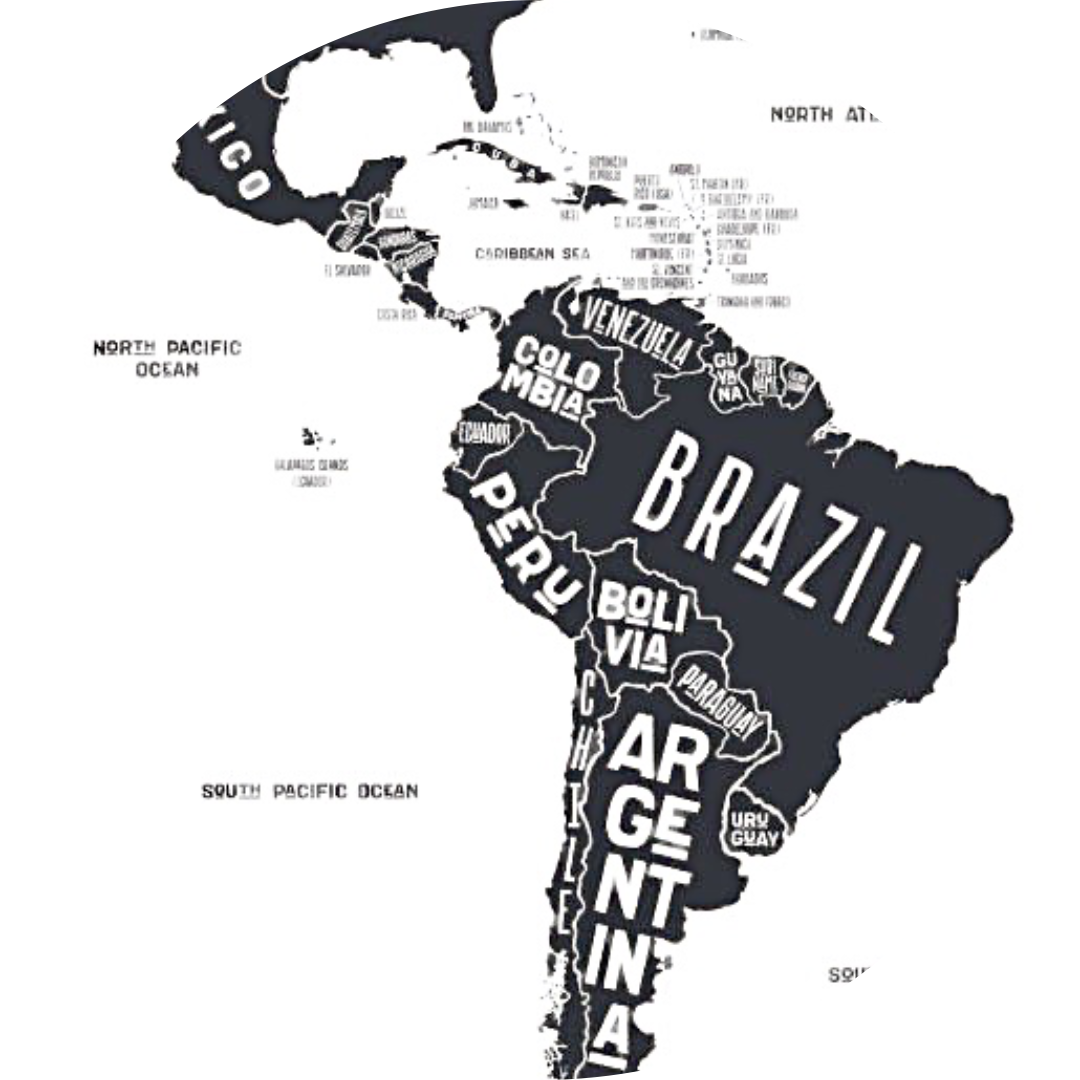
The End of "Made in Argentina" Sneakers
End of an Era: Last Nike and Adidas Sneaker Factory in Argentina Shuts Down

The era of homegrown global sportswear in Argentina has officially come to an end.
Between July 17 and 25, 2026, Brazilian manufacturer Grupo Dass permanently powered down the assembly lines at its plant in Eldorado, Misiones. As the last facility in the country producing sneakers for Nike (and previously Adidas), its shutdown marks the final chapter in nearly two decades of local manufacturing for the world’s top athletic brands.
The remaining 150 workers were laid off with full severance payments as the factory closed its doors for good.
From Peak Powerhouse to Skeleton Crew
The Eldorado plant was once a central industrial engine for Misiones. Opened in 2007, the facility buzzed with 1,500 to 1,700 workers operating up to 60 production lines at its peak.
The eventual closure was the result of a gradual, multi-year slowdown:
January 2025: Dass shuttered its Coronel Suárez facility in Buenos Aires province, cutting 360 jobs and consolidating all remaining production into Eldorado.
2025–2026: Squeezed by high domestic operating costs, dropping domestic demand, and trade liberalization, local orders rapidly evaporated.
Faced with cheaper production options abroad, brands increasingly sourced finished sneakers directly from larger hubs in Brazil and Asia. By early 2025, imported pairs flooded the market while local production plummeted to a fraction of its former volume. Eldorado was left running just 15 lines with a skeleton crew before the final pull of the plug.
A Commercial Pivot
While manufacturing has ceased, Grupo Dass isn't leaving Argentina entirely. Instead, the company is pivoting to a purely commercial and logistics model. It will continue importing and distributing footwear for brands like Fila, Umbro, and Asics across the country.
Nike and Adidas products will remain widely available in local stores—they just won't carry a "Made in Argentina" tag anymore.
For Eldorado and the broader Argentine manufacturing sector, the plant's quiet final days highlight just how swiftly global supply chains realign when economic incentives and trade policies shift.
Disclaimer
The authors of this newsletter article have professional experience with industrial projects in Argentina, including work in the automotive supply sector, machinery and plant engineering for the mining industry, and the textile sector. Since 2026, they have also been engaged with two Argentine companies in the packaging industry and a supplier in the pharmaceutical value chain that face potential closure; they are supporting those companies’ efforts to relocate operations to Brazil and/or Paraguay. The authors previously worked in Argentina’s textile industry and maintain professional contacts in that sector. They played a significant role in managing aspects of the process surrounding the closure of Adidas and Nike production lines in the country. This background is disclosed for transparency.
AI Tools in Project Missions
Step into the AI Arsenal: the cutting-edge generative tools we deploy in client projects, internal operations, and partner collaborations—tested, trusted, and ready for battle.

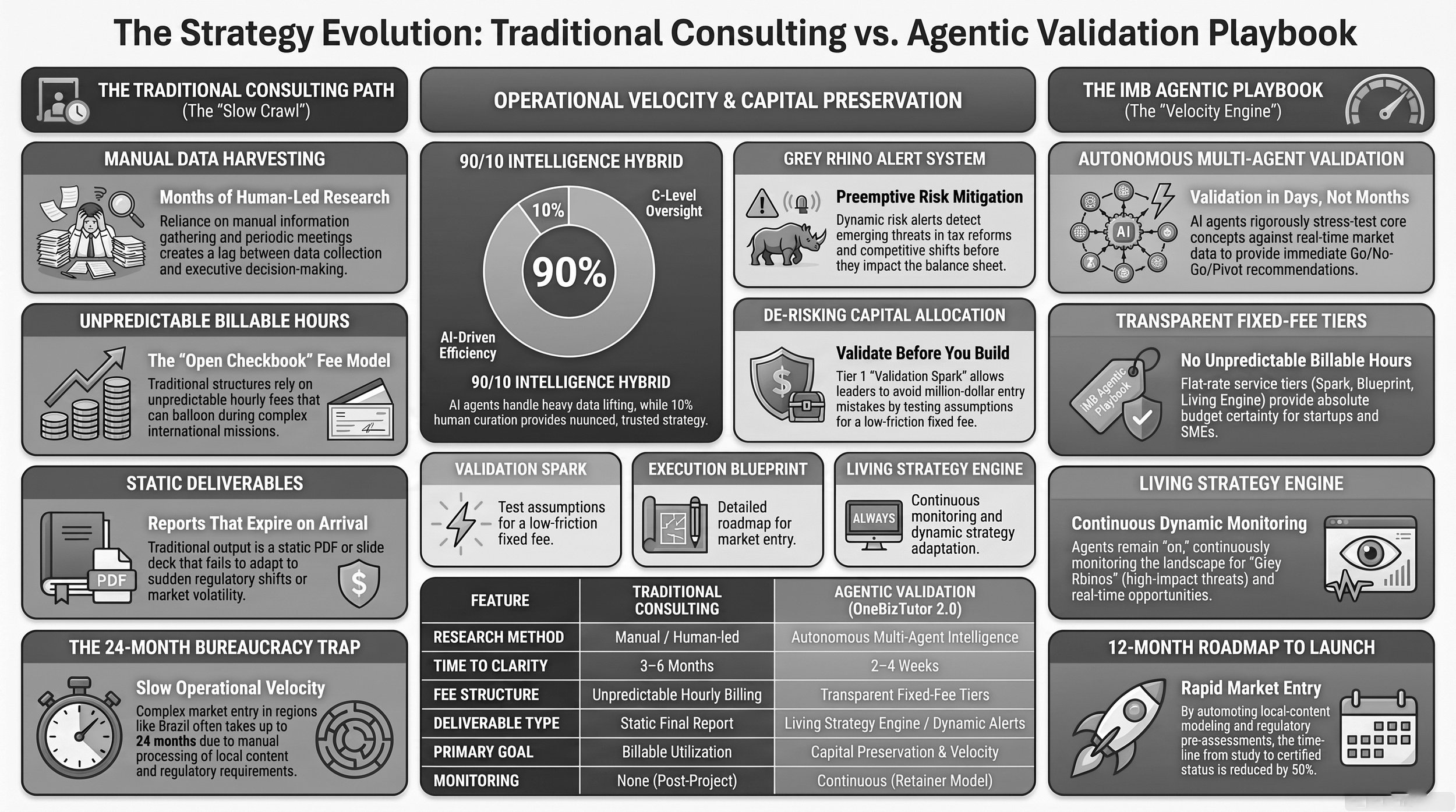
Concept Fact Sheet: The Evolution of Agentic AI in Business Strategy
Defining the Shift: From Generation to Agency
The landscape of Artificial Intelligence is undergoing a seismic transition from "Traditional Generative AI"—tools primarily designed for content creation and linguistic assistance—to "Next-Gen Agentic AI." This is not merely a technical upgrade; it is a shift toward autonomous strategy platforms. While traditional models provide static responses, Agentic AI utilizes a decentralized, multi-agent architecture to perform process mining and model validation. In high-complexity markets, this technology moves beyond "asking questions" to building autonomous execution frameworks within a secure Web3 Project Space, allowing leaders to validate market entry and model viability with unprecedented velocity.

Definition: Agentic AI
An autonomous, implementation-oriented intelligence system composed of specialized software agents (e.g., Regulatory, Financial, and Operational agents) that work in concert to solve complex problems. Unlike creative GenAI, Agentic systems are designed to perform multi-step tasks, stress-test business assumptions through adversarial simulation, and provide continuous strategic oversight.
To master this transition, executives must understand the fundamental architectural differences that separate a simple chatbot from a strategic engine.
Traditional AI vs. Agentic Strategy Engines: A Comparative Analysis
The move to agentic platforms like OneBizTutor® 2.0 represents the professionalization of AI for the C-Suite. It replaces the "black box" of standard AI with a structured 90/10 hybrid model: 90% AI-driven automation for speed and depth, and 10% high-stakes oversight by interim managers with decades of industrial experience.
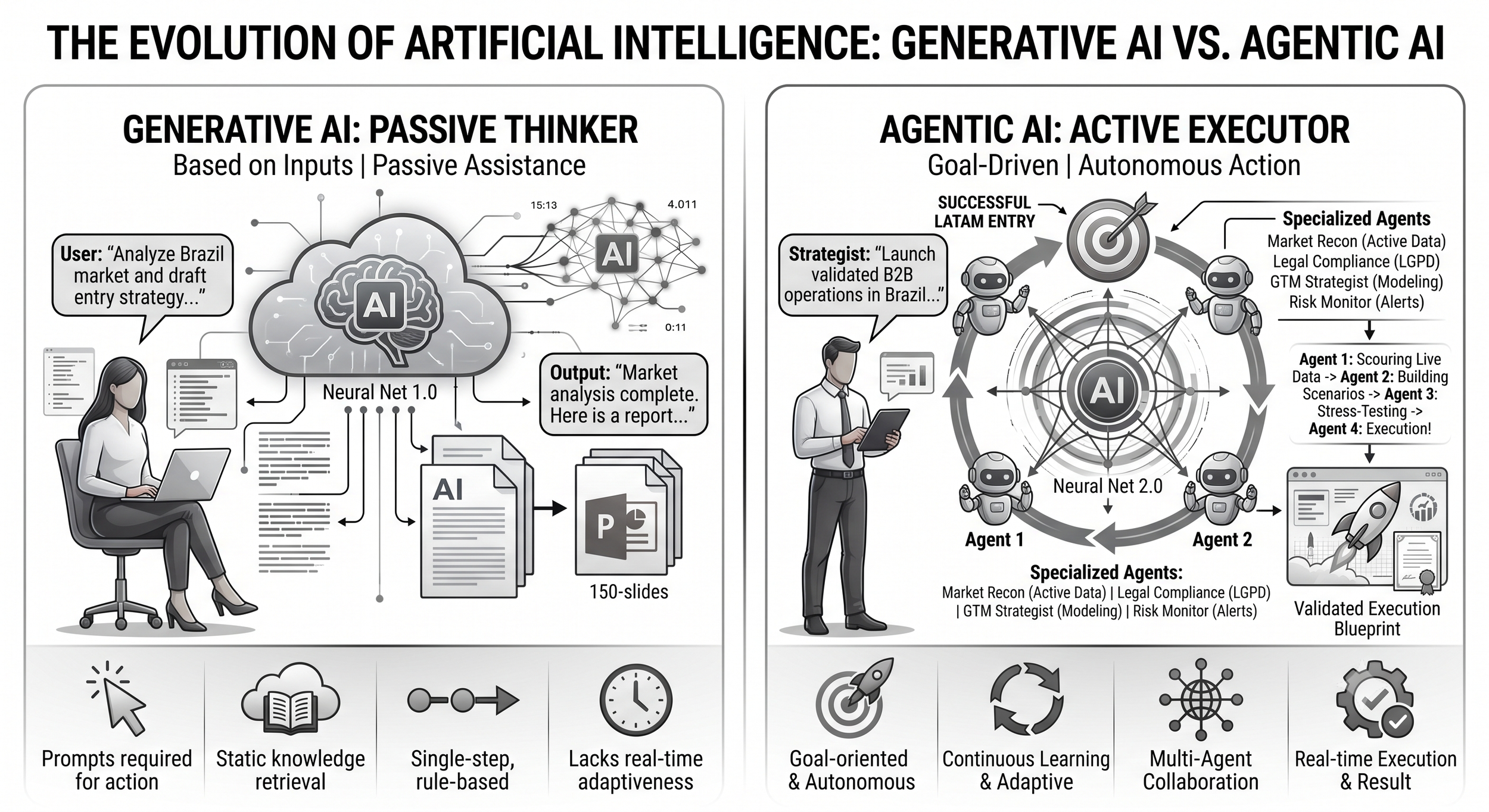
These technical distinctions empower specific toolkits designed to de-risk capital allocation in volatile global markets.

click on image above and access OneBizTutor®
The Three Pillars of Agentic Strategy (Service Tiers)
OneBizTutor® 2.0 organizes its agentic capabilities into three distinct tiers, providing a curriculum for market entry that scales with the user’s risk profile:
The Validation Spark (Rapid Validation) — Starting at US$ 12,000
The Function: Specialized agents stress-test a core concept using the "DataSuperCharger" to retrieve real-time market data.
The Primary Benefit: Saves massive capital by identifying "million-dollar mistakes" before a physical footprint is established.
Learning Insight: This aligns with boutique discovery engagements (typically US$ 20k+) but delivers result-certainty in a fraction of the time.
The Execution Blueprint (The Full Launch Kit) — Starting at US$ 35,000
The Function: Transforms a validated spark into a comprehensive, hyper-localized roadmap, including localized brand narratives and operational modeling.
The Primary Benefit: Provides a 12-month path to certification, bypassing the common 24-month "bureaucracy trap."
Learning Insight: This tier directly replaces traditional US$ 100k–US$ 250k consulting projects by utilizing agentic automation to reduce billable hours.
The Living Strategy Engine (Active Market Engine) — Starting at US$ 4,000/mo
The Function: AI agents remain active within a Web3 Project Space, monitoring competitive landscapes and regulatory updates.
The Primary Benefit: Detects "Grey Rhinos"—highly probable, high-impact threats that leaders often ignore until it is too late.
Learning Insight: It acts as a fractional C-suite advisory, ensuring the strategy evolves as fast as the market.
Key Capabilities: Validation, Stress-Testing, and Monitoring
The "superpower" of an agentic platform lies in its ability to simulate reality before a single dollar is spent:
Real-time Market Validation (DataSuperCharger): Agents are programmed to navigate specific local hurdles, such as the BNDES Finame pre-assessment in Brazil, ensuring financial feasibility is baked into the model from day one.
Red Teamer Stress-Testing: This capability functions as a digital "adversary" that attacks a business plan from every regulatory, financial, and competitive angle to identify structural weaknesses.
"Grey Rhino" Detection System: Operating within the Living Strategy Engine, this provides continuous surveillance of tax reforms and competitive shifts, turning "unforeseen" market pivots into manageable data points.
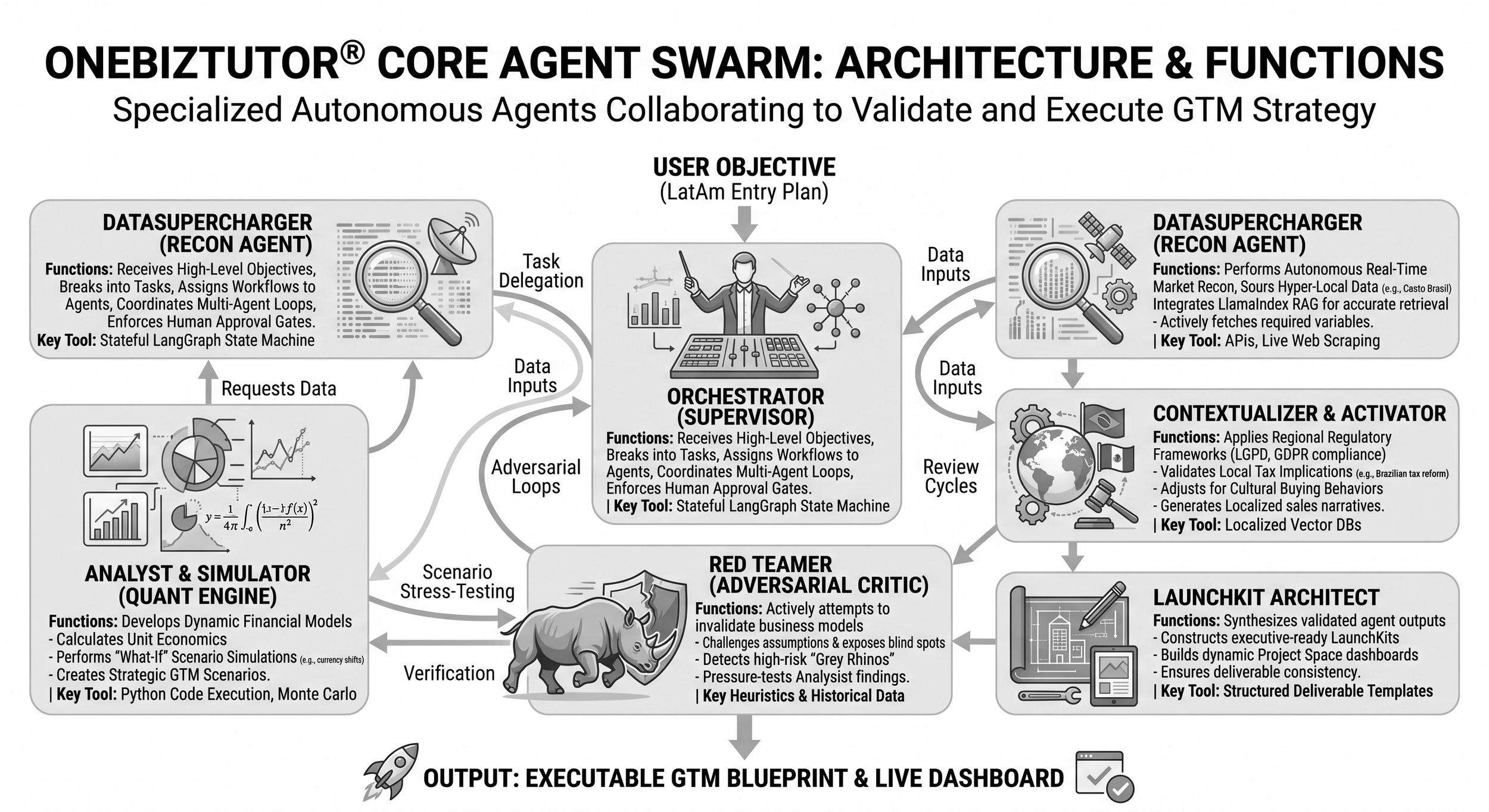
click on infographic above and learn more about the Core Agent Swarm
High-Stakes Applications: Solving the "Impenetrable Market" Problem
Agentic AI is most transformative in markets with "hyper-local" insulation, such as Brazil and Mexico (USMCA). In these regions, generic data is insufficient; strategy requires process-oriented precision.
Solving Complexity (real world business case examples):
Neutralizing "Custo Brasil": By modeling complex local tax structures and the specific partner ecosystems in the ABC region (São Bernardo do Campo), the AI renders the "impenetrable" market transparent.
Accelerating Certified Status: For European EV component companies, the platform has successfully mapped Tier-1 supplier paths for Eletra and major chassis OEMs, reducing the standard 24-month entry timeline to just 12 months.
USMCA Nearshoring Optimization: In Mexico, agents align supply chain models with "local content" requirements, a critical game-changer for European suppliers needing to comply with USMCA trade dynamics to ensure competitive unit economics.
Summary: The Key Takeaways
To master the strategic application of Agentic AI, prioritize these three actionable principles:
[ ] Prioritize Data-Backed Certainty: Move away from "gut-feeling" strategy. Use the "Validation Spark" to stress-test assumptions against real-time data (like BNDES Finame in Brazil) before allocating capital.
[ ] Apply the 90/10 Governance Model: Trust the 90% automation for speed, but ensure the 10% human oversight is performed by C-level experts with relevant industrial heritage (e.g., Automotive, Mining, Energy).
[ ] Adopt a "Living Strategy" Mindset: Strategic planning is no longer a "one-and-done" report. Utilize active agents to monitor for "Grey Rhinos" and maintain agility in volatile growth corridors.
define your Project Space with OneBizTutor® 2.0

Contact

Discover What Matters Most to You—Backed by 150+ Project Missions!
Curious about the impact of our insights at iMB.Solutions? We put our articles, blogs, and case studies to the test—running three independent AI-driven queries with Perplexity, Google Gemini, and Mistral. The result? A powerful keyword cloud reflecting the topics that truly resonate.
Do you see yourself in these trends? Let’s connect and explore how our expertise—shaped by 150+ project missions over two decades—can drive your success.