

Intro
Today, on Sunday, October 25, 2026, millions of voters head to the polls to decide the presidential runoff between Luiz Inácio Lula da Silva and Flávio Bolsonaro. While campaign headlines throughout the race focused heavily on scandals and political noise, understanding the true direction of Latin America's largest economy requires looking at structural policy trends.
Released on runoff day, the podcast episode "Structural Stakes of Brazil's 2026 Election" distills key insights from eight prominent specialists consulted by business daily Valor Econômico.
Here is a breakdown of the core issues covered in the episode:
1. Preserving Democratic Institutions and Legal Certainty
The podcast establishes that democratic normality is the foundation of economic growth. Political scientist Sérgio Abranches warns of institutional strain between Congress and the Supreme Federal Court (STF), while industrialist Horácio Lafer Piva and Pedro de Camargo Neto stress that legal certainty for corporate investments requires government branches to act strictly within constitutional limits.
2. Fiscal Discipline vs. Legislative Gridlock
Macroeconomic stability stands at a major fork in the road. While economist Armando Castelar Pinheiro outlines how the vote will shape public debt management and interest rates, Solange Srour (UBS Global Wealth Management) warns that congressional disputes over political amnesties or judicial impeachments risk paralyzing vital economic reforms.
3. Climate Tipping Points vs. Global Nature Superpower
Climate Risks: Climatologist Carlos Nobre flags that 60% of Congress backs agendas favoring weaker environmental licensing and deforestation tracking, bringing biomes like the Amazon and Cerrado near ecological tipping points.
Economic Opportunity: Ilona Szabó (Igarapé Institute) emphasizes that environmental protection, public safety, and economic development are part of a single, indivisible agenda necessary to protect agribusiness and energy exports.
4. Education, Rural Safety, and AI Governance
Educational Continuity: Priscila Cruz (Todos Pela Educação) advocates for sustaining proven educational strategies across executive changes.
Rural Asset Security: Pedro de Camargo Neto flags the urgency of tackling organized crime advancing into agricultural corridors.
Digital Transformation: Sérgio Abranches highlights the immediate challenge of establishing national AI governance during the global digital transition.
Executive Summary - Infographics
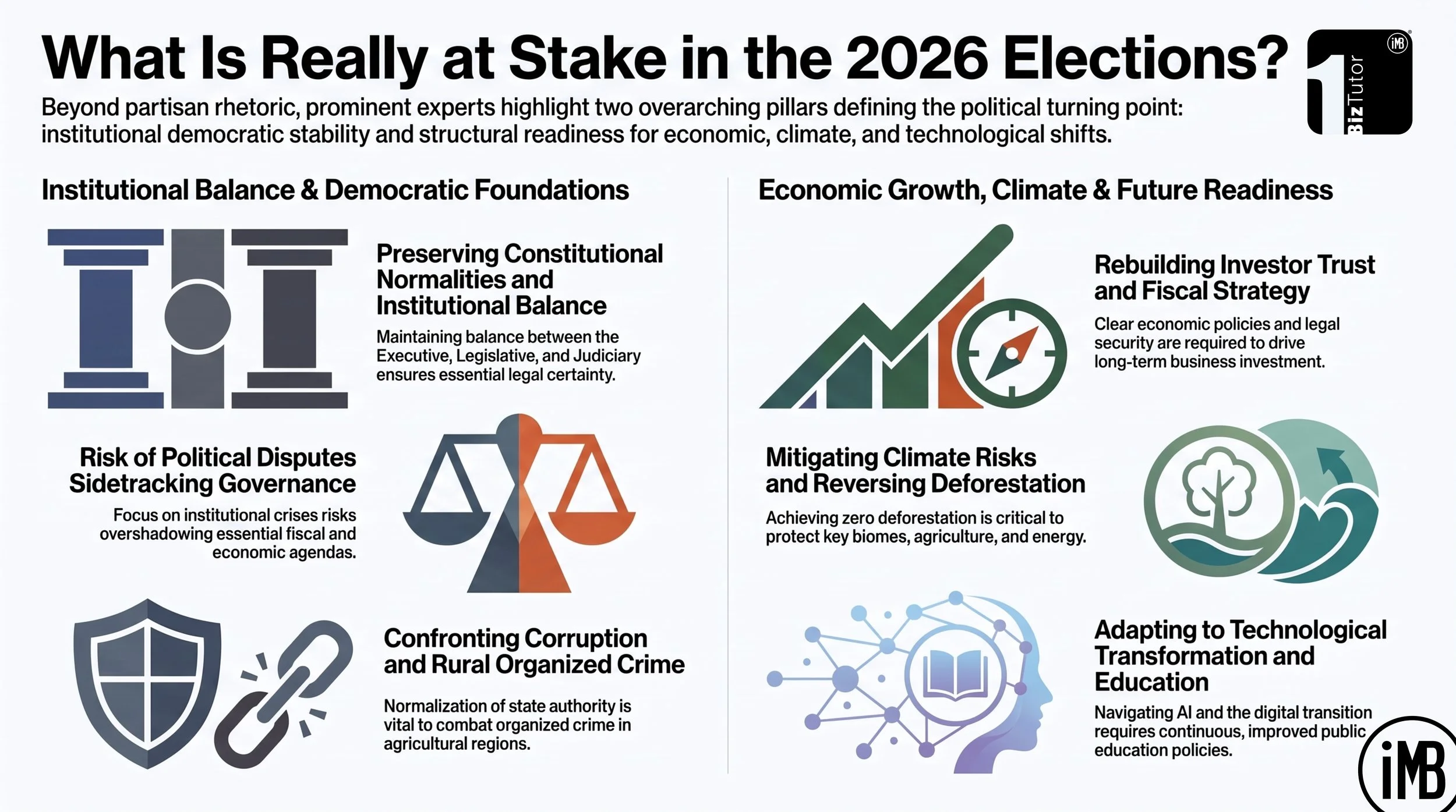
generated by OneBizTutor®, iMB.Solutions Ltda., São Paulo, Brazil, Oct. 24, 2026 - 03:38 PM
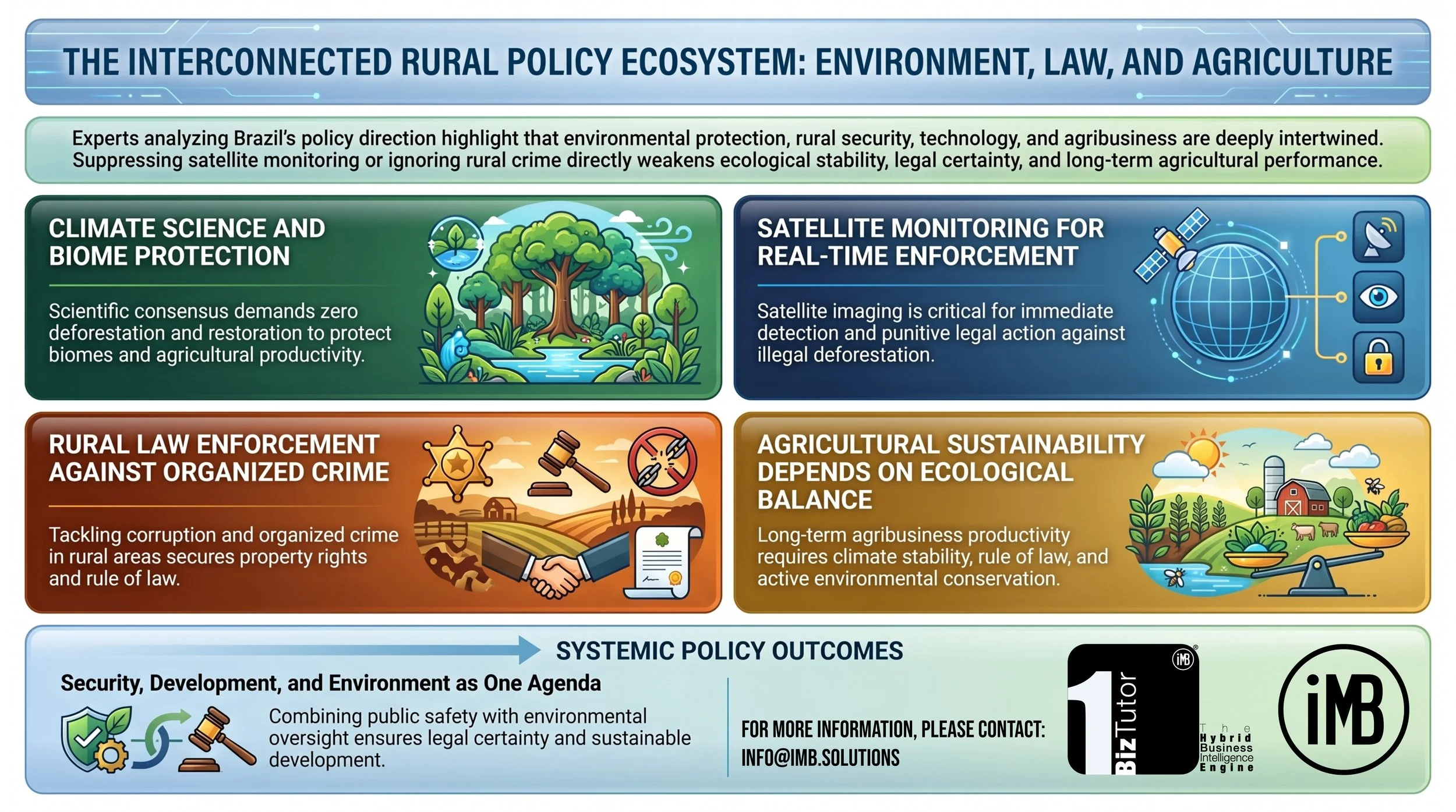
generated by OneBizTutor®, iMB.Solutions Ltda., São Paulo, Brazil, Oct. 24, 2026 - 03:46 PM